EU commissioner says her journey to Gaza via Rafah crossing not granted by Israel

Middle East Monitor:

EU Commissioner for Equality and Acting Commissioner for Crisis Management Hadja Lahbib announced Friday that she wanted to cross into the Gaza Strip during her visit to Egypt, but Israel did not grant her permission, Anadolu reports.

Noting that Palestinians are being killed every day in Gaza and two children lose their lives daily, Lahbib said since the start of the recent ceasefire, 347 Palestinians, including 67 children, have been killed.

Stating that she had planned to cross the border to see the situation "firsthand," Lahbib said Israel's refusal to grant permission "deeply saddened us."

Emphasizing that Gaza has turned into a graveyard for thousands, including humanitarian aid workers, Lahbib noted that around 600 aid workers trying to save lives while simply doing their jobs have been killed in what has become the most dangerous place in the world.

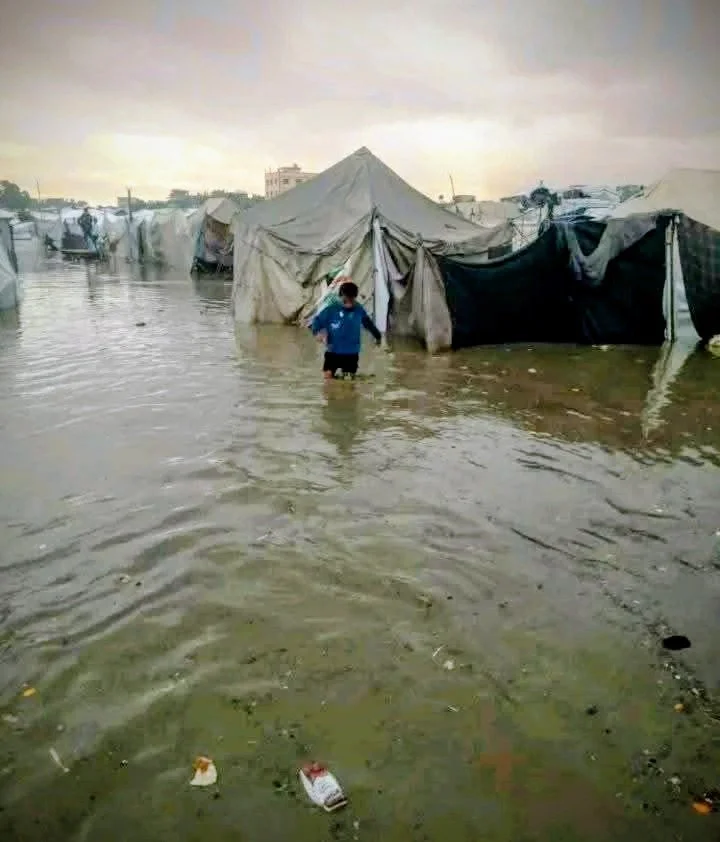
Noting that with winter approaching, Palestinians have no place to go and no means to stay warm, Lahbib pointed out experts' remarks on the situation, that winter will be "disastrous."

Reiterating that the ceasefire must continue, Lahbib stressed that full compliance with the ceasefire and respect for international law is the only way to protect civilians.

Lahbib stated that it is necessary to move from the first phase of the phased ceasefire to the second, and Hamas must be disarmed and the remaining hostages returned.

She said aid has begun to reach people and that this is a step forward, but only a very small portion of the need is being met.

She urged Israel to allow NGOs to carry out their work, stressing the need for procedures to be faster.

She noted that even some tents and sleeping bags are classified as “dual-use” --items that can be used for civilian and military purposes -- calling it unacceptable.

Read the entire article here.

Humanitarian Situation Update | West Bank. Nov 27

The Humanitarian Situation Updates on the Gaza Strip and on the West Bank are both issued every Wednesday/Thursday. The next Humanitarian Situation Update on the West Bank will be published on 3 or 4 December.

Key Highlights

  • Israeli forces killed eight Palestinians, including one child, and Palestinians killed one Israeli across the West Bank, including East Jerusalem, during the reporting period.

  • More than 1,000 Palestinians have been injured in settler attacks so far in 2025, more than double the number of Palestinians injured in settler attacks in 2024.

  • Thousands of Palestinians have been affected by the intensification of movement restrictions in the Hebron governorate since 23 November.

  • Since October 2023, Israeli forces have killed 14 Palestinians and injured more than 200, while they were attempting to cross the Barrier, amid a severe economic downturn in the West Bank.

Humanitarian Developments

  • Between 18 and 24 November, Israeli forces killed eight Palestinians, including a child, and one Palestinian killed one Israeli man, in the West Bank, including East Jerusalem. During the same period, 61 Palestinians and four Israelis were injured. The following are details of the incidents that resulted in fatalities:

  • On 18 November, two Palestinians attempted to run over a crowd of Israelis at Gush Etzion settlement junction along Road 60, in Bethlehem governorate. One of the Palestinians reportedly exited the vehicle and began stabbing people, killing an elderly Israeli man and injuring two others, including a child. Israeli forces opened fire and killed both Palestinian men and reported finding explosive materials in their vehicle. Their bodies were withheld by the Israeli authorities. An Israeli woman was reportedly injured by Israeli fire, according to the Israeli media. Following this attack, Israeli forces closed all four road gates leading to Hebron city, leaving thousands of Palestinians stranded for many hours, and carried out raids in Beit Ummar town and Hebron city, the hometowns of the assailants. In Beit Ummar, Israeli forces sealed the entrance of the family home of one of the assailants, displacing three families residing in the same building, imposed a three-day curfew, and closed internal roads with 12 earth mounds, which were removed on 22 November by the municipality. Since 23 November, Israeli forces have continued to close seven main gates, three of which control access to Hebron city and four that lead to nearby communities, isolating two towns and one refugee camp (Halhul, Beit Ummar and Al Arrub refugee camp) and leaving only one entrance open to and from the city. The closures have caused severe traffic congestions and long delays for thousands of Palestinians seeking to enter or exit Hebron city, the main service provider for surrounding towns and villages. These access restrictions remain in place as of the time of reporting.

  • On 21 November, Israeli forces killed and withheld the body of a Palestinian man after surrounding his house during a raid in Tell village, in Nablus governorate. Local sources reported that the man was killed upon leaving his house by snipers positioned on nearby rooftops. According to an Israeli military statement, the man had shot and wounded a soldier during an overnight raid in Nablus city the previous day.

  • On 21 November, Israeli forces shot and killed two Palestinians, including a child and a young man, during an overnight raid in Kafr Aqab, in East Jerusalem. Israeli forces reportedly broke into several buildings and positioned snipers on rooftops, while Palestinians threw stones at the Israeli forces.

  • On 23 November, Israeli forces shot and killed a Palestinian man with live ammunition in Deir Jarir village, in Ramallah governorate, after Israeli settlers raided the outskirts of the village and Palestinians threw stones toward the settlers to push them back. This is the third fatality during settler attacks reported in the past three months in the same area of Deir Jarir and comes amid a marked rise in settler attacks since early 2025.

  • On 24 November, Israeli forces killed and withheld the body of a Palestinian man in an exchange of fire during an overnight raid that lasted for 10 hours in Mirka village, in Jenin governorate. In a statement, the Israeli military announced that the man was responsible for the killing of an Israeli settler in Kedumim settlement, in Qalqiliya governorate, on 18 August 2024.

  • On 24 November, a Palestinian man was killed in an exchange of fire with Israeli forces, including undercover forces, who reportedly surrounded the house he was in and fired shoulder-launched missiles toward it in Nablus city. According to an Israeli military statement, the man perpetrated a ramming attack against soldiers at Nablus-Awarta checkpoint on 29 May 2024, killing two soldiers.

  • Between 1 and 24 November, 12 Palestinians were injured while they were attempting to cross the Barrier to reach East Jerusalem and Israel, including 11 in Jerusalem and one in Hebron. Since 7 October 2023, when Israeli authorities revoked or suspended most permits issued for Palestinian workers and others to gain access to East Jerusalem and Israel, OCHA has documented the killing of 14 Palestinians and the injury of over 200 others while trying to cross the Barrier, reportedly to access workplaces in East Jerusalem and Israel, against the backdrop of a severe economic downturn in the West Bank. The monthly average of Palestinians injured by Israeli forces while attempting to cross the Barrier has significantly increased in 2025 to nearly 12 Palestinians injured per month, double the monthly average for 2024 (six) and up from about one Palestinian injured per month within this context in the last three months of 2023.

  • The UN Conference on Trade and Development (UNCTAD) reports that two years of operations by Israeli forces and extensive damage to infrastructure and productive assets have reversed decades of socioeconomic progress and development gains in the Occupied Palestinian Territory (OPT). According to UNCTAD, the West Bank has experienced the worst economic decline since the organization began to maintain records in 1972. In 2024, Gross Domestic Product (GDP) shrank by 17 per cent, and GDP per capita by 18.8 per cent, erasing 17 years of economic progress. By the end of 2024, total GDP had fallen to 2014 levels, GDP per capita to 2008 levels, and unemployment rose to 35 per cent. In a press release, UNCTAD stressed: “The expansion of settlements and movement restrictions continue to fragment the West Bank, disrupt the economy, trade and investment, and reduce access to land, resources and markets. These restrictions affect over 3.3 million people, raising transport costs, lengthening travel times and disrupting access to markets, employment, education and health services.”

  • Between 18 and 24 November, OCHA documented the demolition of 21 Palestinian-owned structures, all by Israeli authorities, for lacking Israeli-issued building permits, which are almost impossible for Palestinians to obtain. These included 15 structures in eight villages and towns in Area C and six structures in Beit Hanina, in East Jerusalem. The structures comprised six residential structures, 11 agricultural and livelihood structures, and four other structures. In total, two Bedouin families comprising 18 Palestinians, including 13 children, were displaced in one incident on 21 November in An Nabi Musa community, in Jericho governorate, in an area designated as a "firing zone” by the Israeli military. During the incident, three residential structures, two animal shelters and a solar panel system provided as humanitarian assistance were demolished. Also in Jericho, an 800-square-metre chicken pen and a 3,500-square-metre agricultural water tank were demolished in Marj al Ghazal village, affecting 14 families comprising 87 people, including 53 children.

Update on H2 Movement Restrictions

  • Since 23 November, Israeli forces have continued to intermittently close Ash Shuhada Street checkpoint (CP 56) in the direction of the Tal Rumeida and Ash Shuhada Street neighbourhoods within the restricted zone of the H2 area of Hebron city, severely hindering the movement of approximately 800 Palestinian residents, 125 students and 19 teachers. Exit from the area continues to be permitted. Between 23 and 26 November, the checkpoint was closed between six and nine hours each day. During the times when the checkpoint was closed, residents were unable to directly access their homes and were forced to take long detours through alternative routes. Students and staff of Qurtuba School, one of 34 schools in H2 serving about 125 students and 19 teachers, were also required to use alternative, longer routes, including through Mashhad al Arba’in checkpoint, which adds approximately 20 minutes by car. The detour also requires passing through an olive grove frequently used by settlers, increasing residents’ sense of insecurity.

  • Since October 2023, Israeli forces have imposed a new system regulating the movement of Palestinian residents of the restricted area of H2 through the three main designated checkpoints, with daily opening hours from 07:00 to 20:00. This system has further restricted movement between Palestinian neighbourhoods within the closed areas of H2 (with a population of about 7,000 Palestinians) and access to key sites, including the Ibrahimi Mosque and its charity soup kitchen. Since 7 October 2023, OCHA has documented the detention of at least 427 Palestinians, including 52 children, in the H2 area, including at established checkpoints or at ‘flying’ or mobile checkpoints.

  • Movement restrictions in the H2 area of Hebron city have further intensified since July 2025 due to the placement of additional closures in the area by Israeli forces. On 21 July, Israeli forces placed barbed wire and sealed the doors at the two main entrances leading to Palestinian homes in the As Salaymeh neighbourhood, located in the restricted area of H2. The closures prevent the entry and exit of 11 families comprising 66 people, including 26 children, into and from their homes. The only remaining routes require the families to pass through neighbours’ homes, walking across fields, and climbing ladders over walls of surrounding buildings. Among those affected are two people with chronic illnesses and one person with a mobility disability who requires regular hospital visits. In a separate incident on 2 October, Israeli forces welded shut another main entrance to a residential building in the same neighbourhood, severely affecting the movement of seven families comprising 38 people, including 23 children, as well as 25 children who attend a kindergarten in the same building – forcing them to similarly rely on indirect, improvised and unsafe routes.

Operations by Israeli Forces in the Northern West Bank

  • Israeli forces continued to carry out large-scale operations across the northern West Bank, particularly in parts of Tubas, Tulkarm and Jenin governorates, resulting in casualties, displacement and disrupted access to essential services.

  • In Tubas governorate, on 26 November, Israeli forces launched a large-scale operation, deploying military jeeps and bulldozers in Tubas city and the surrounding villages of Tammun, Aqqaba, Tayasir, and Wadi al Fara’. The operation remains ongoing at the time of reporting. At least 30 Palestinian families across Tubas, Tammun, and Tayasir were forcibly evacuated and displaced from their homes, which Israeli forces also used as observation points, and have been hosted by relatives and friends since then. Israeli forces have closed about a dozen main and secondary roads, imposing severe movement restrictions across the governorate. According to the Palestinian District Coordination Office (DCO), Israeli forces announced and enforced an open-ended curfew across the governorate and continue to conduct search operations and detentions. The operation has significantly disrupted access to essential services, with initial reports indicating that bulldozers damaged the water network between Tammun and Khirbet ‘Atuf on 26 November, disconnecting water supply serving residential areas and agricultural land.

  • In Nur Shams refugee camp in Tulkarm governorate, Israeli forces shot and injured two Palestinians, including one child and one journalist on 18 November, during a protest. About 100 displaced Palestinian residents from Nur Shams refugee camp had gathered to demand a return to their homes and an end to the Israeli forces’ operation that has been ongoing since January 2025 and that has resulted in the displacement of about 8,700Palestinians from Nur Shams Camp, according to UNRWA.

  • In Jenin governorate, Israeli forces carried out multiple operations resulting in injuries, detention, and significant movement restrictions. On 24 November, at the entrance to Jenin refugee camp, Israeli forces detained a Palestinian family from Silat al Harithiya village, including a three-year-old child and his two parents, who mistakenly walked toward the camp while leaving a medical appointment at the nearby Jenin governmental hospital. Despite interventions by the Palestinian District Coordination and Liaison Office (DCL), forces held the family for about 10 hours (10:00 – 20:00) and physically assaulted the father before releasing them near the hospital. Earlier, on 18 November, Israeli forces shot and injured a 14-year-old boy with live ammunition while he was inside his home in Al Yamun village during a raid in which no confrontations or arrests were reported. On 20 November, Israeli forces raided Zububa village, northwest of Jenin city, and installed six earth mounds on two main roads and four side roads, severely restricting movement for the village’s 2,700 residents. As a result, residents were forced to use narrow, unpaved dirt roads to reach their homes. The earth-mounds were removed by the village council on 26 November, following coordination between the Israeli and Palestinian DCLs.

Israeli Settler Attacks

  • Between 18 and 24 November, OCHA documented 36 Israeli settler attacks against Palestinians that resulted in casualties, property damage or both in the West Bank, including East Jerusalem. The attacks led to the injury of 22 Palestinians, including 20 by Israeli settlers. More than 180 Palestinian-owned (mainly olive) trees and saplings were vandalized. Additionally, two families comprising 12 Palestinians, including eight children, were displaced citing settler violence. The number of settler attacks during this past week has been consistent with the weekly average of approximately 35 attacks recorded since the beginning of 2025.

  • On 23 November, two Palestinian households comprising 12 people, including eight children, were forcibly displaced from Al Hathroura Bedouin community (with a population of about 200 people), in Jericho governorate, and relocated to Area B, following repeated settler attacks that followed the establishment of a new settlement outpost two days earlier less than 50 metres from their homes. The outpost reportedly consists of a metal structure placed on a hill overlooking the community. Immediately after its establishment, settlers reportedly carried out repeated attacks, including breaking into homes, ransacking property, and issuing threats. Children were particularly affected, as settlers chased them several times, forcing them to remain indoors out of fear. During the night, settlers broke into the homes while residents were sleeping and, at dawn, assaulted the men with sticks and threatened to kill the families if they did not leave within hours. The families began relocating the next morning under settlers’ direct observation and harassment, managing to take only basic personal belongings and limited furniture, while leaving behind residential structures and most possessions. Settlers occupied the abandoned structures shortly afterwards. With the establishment of this outpost, Al Hathroura Bedouin community is now surrounded by six settlement outposts.

  • This is the second displacement incident reported in Al Hathroura this month. On 6 November, Israeli settlers believed to be from an outpost located east of the community, approximately 700 metres away, destroyed 12 Palestinian structures using a bulldozer, including seven residential structures, two bathrooms, and three animal shelters. The attack displaced five households comprising 16 people, including seven children, and affected three additional households of 14 people. Many families had temporarily relocated women and children during the night due to fear generated by previous settler attacks. The demolition destroyed donor-funded structures, personal belongings, and shelters used for seasonal winter movement.

  • Since the beginning of 2025, OCHA documented more than 1,600 attacks perpetrated by settlers against Palestinians that led to casualties and/or property damage, affecting over 270 communities across the West Bank, primarily in Ramallah, Nablus and Hebron governorates. Among others, these incidents led to the injury of over 1,000 Palestinians, mainly due to physical assault, stones or tear gas inhalation. About 70 per cent were injured by Israeli settlers and the rest by Israeli forces or where it remains unknown if they were injured by Israeli forces or settlers. Of more than 700 Palestinians injured by Israeli settlers during settler attacks so far this year, more than 40 per cent were injured in June, July and October, when at least 100 Palestinians per month were injured by Israeli settlers. This is double the number of Palestinians injured by Israeli settlers during settler attacks in all of 2024, when about 360 such injuries were documented (see graph).

Funding

  • As of 27 November 2025, Member States have disbursed approximately US$1.6 billion out of the $4 billion (40 per cent) requested to meet the most critical humanitarian needs of three million out of 3.3 million people identified as requiring assistance in Gaza and the West Bank, including East Jerusalem, under the 2025 Flash Appeal for the OPT. Nearly 88 per cent of the requested funds is for the humanitarian response in Gaza, with just over 12 per cent for the West Bank. During October 2025, the oPt Humanitarian Fund managed 135 ongoing projects, totalling $77.7 million, to address urgent needs in the Gaza Strip (87 per cent) and the West Bank (13 per cent). Of these projects, 63 are being implemented by international NGOs, 56 by national NGOs and 16 by UN agencies. Notably, 69 out of the 79 projects implemented by international NGOs or the UN are being implemented in collaboration with national NGOs. For more information, please see OCHA’s Financial Tracking Service webpage and the oPt HF area webpage.

Gaza Humanitarian Response Situation Report. November 27

27 November 2025
(As of 18:00 on 26 November 2025, unless otherwise noted)

HIGHLIGHTS

  • Between 23 and 25 November, partners assisted 18,000 families with monthly food parcels through 59 distribution points across Gaza. Since the start of November, over 204,000 families (1,020,000 people) have received food parcels as part of the monthly assistance cycle.

  • Nutrition Cluster partners continue to expand malnutrition treatment sites in northern Gaza. Eight new sites were opened last week, bringing the total number of functional sites in the north to 31 and more than 140 across the Strip.

SITUATION OVERVIEW

Based on an initial observation by the Food Security Cluster Partners, as of 24 November, market conditions remain fragile. Firewood prices have risen sharply due to increased winter demand and limited supply. While prices of some vegetables, such as tomatoes, cucumbers, eggplant, onions, and potatoes, have decreased, they remain roughly three times higher than pre-war levels. Wheat flour availability has improved due to aid distributions, with prices currently ranging from three to four NIS (1.2 US$) per kilogram and 40 to 45 NIS (14$) for a 25 kg bag.

People across Gaza are facing growing challenges as winter worsens. Many families live in worn-out tents that offer little protection from cold or rain, while financial hardship makes purchasing winter essentials nearly impossible. These conditions are increasing stress for children and caregivers. Meeting the needs of vulnerable families is even harder as shelters deteriorate, leak, and sustain damage, while field teams operate in harsh conditions with minimal heating. Heavy rain has damaged tents used as safe spaces for women and children, disrupted activities at several sites, and delayed winter clothing distributions.

UNITED NATIONS-COORDINATED AID ENTRY*

On 26 November, 4,431 pallets of aid administered by the UN and its partners were offloaded at Gaza’s crossings, based on data retrieved from the UN 2720 Mechanism dashboard at 18:00 on 27 November. About 47 per cent of these pallets contained food supplies, followed by shelter (43 per cent), water, sanitation and hygiene supplies (7 per cent), health supplies (2 per cent), and protection supplies (less than 1 per cent). At least 190 truckloads were offloaded in Kerem Shalom.

On 26 November, the United Nations Office for Project Services (UNOPS) international monitors deployed at Gaza’s crossings reported the collection of 7,286 pallets of aid from Kerem Shalom (6,320 pallets) and Zikim (966 pallets) crossings. These comprised 4,256 pallets of food supplies, including food parcels, fresh vegetables, canned chicken and vegetables, and wheat flour; 603 pallets of winter clothes, 631 pallets of tents, 837 pallets of emergency shelter materials, including blankets, kitchen kits, and tarpaulins; 42 pallets of water tanks, and 647 pallets of health and dignity kits.

Overall, between 10 October, when the ceasefire entered into effect, and 26 November, at least 116,468 pallets of humanitarian cargo were offloaded, and 100,909 pallets were collected, from the different crossings. Of the collected cargo, 1,838 pallets (2 per cent) were intercepted during transit within Gaza. 

All the above data excludes bilateral donations and the commercial sector.  

As of 27 November, Kerem Shalom, Zikim and Kissufim crossings remained operational, with humanitarian cargo offloading and uplifting alternating days between Zikim and Kissufim.
 

HUMANITARIAN RESPONSE


Food Security

  • Between 23 and 25 November, partners assisted more than 18,000 families with monthly food parcels through 59 distribution points across the Gaza Strip, including two in northern Gaza and 19 in Gaza city. Overall, since the start of November, over 204,000 families (1,020,000 people) have received general food parcel distributions as part of the monthly assistance cycle. Transportation and poor road conditions continue to hinder access to communities and partners in northern Gaza.

Nutrition

  • Nutrition Cluster further expanded malnutrition treatment sites in northern Gaza. Eight new sites were opened last week, bringing the total number of functional sites in the north to 31 and more than 140 across the Strip.

Education

  • Education Cluster partners continued fencing works in three schools in eastern Gaza city to demarcate and secure learning spaces within school yards. Tent installation is progressing, with 14 high-performance tents allocated to establish safe spaces for learning and mental health and psychosocial support (MHPSS).

  • Heavy rains continue to disrupt operation of the Temporary Learning Spaces (TLSs). One TLS in Deir al Balah serving 5,773 students, was affected on 25 November, and 38 TLSs have now been affected by the recent rainfalls. Repair efforts remain limited due to severe shortages of tents and tarpaulins.

  • Relocation of internally displaced people (IDPs) from schools that serve as shelters remains a major advocacy priority to free up space for learning. Given the limited available sites and the sensitivities involved, any relocation must be undertaken in a safe, dignified, and appropriate manner. Education partners, together with the Ministry of Education in Gaza, continue efforts to bring children back to learning spaces, although options remain constrained.

Water, Sanitations and Hygiene (WASH)

  • The Sheikh Radwan well has been restored, and another well in Beit Lahiya is already operating with system installation underway. A new pipeline is being extended to Mawasi to serve the IDP site. These efforts are expected to significantly reduce reliance on water trucking.

  • Repairs to sewage installation and water drainage network are ongoing as part of the winterization efforts. Work also continues at the Saftawi Lagoon to manage wastewater collection in Jabalya. Despite these efforts, the Coastal Municipalities Water Utility reported localized flooding across the Gaza Strip, which is expected to persist if repairs are not completed promptly.

Protection

  • Child Protection

    • On 24 November, CP partners successfully reunited 32 unaccompanied and separated children (UASC) with their families.

    • Case management teams have referred high-risk cases affected by the current wave of storms and supported the distribution of 100,000 winter kits for children, with further distributions planned in the coming days.

  • Mine Action

    • On 26 November, partners conducted five explosive hazard assessments.

    • During the period from 23 to 27 November, four partners carried out explosive ordnance risk education sessions in Deir al Balah, Khan Younis, Gaza City, and the Middle Area, reaching a total of 13,941 people.

Site Management Cluster

  • Site Management Cluster partners remain focused on winterization activities, including sandbagging with flour bags and other food security sector food bags, which remain the primary tools available for flood mitigation. 

  • Following recent mapping of flooding risks in sites, partners are conducting on-site assessments to identify additional interventions based on agency capacity. Coordination continues with partners to relocate households at highest risk along the shoreline.

* All figures solely refer to UN and partner assistance dispatched through the UN-coordinated system. They are preliminary and will be reconciled in the course of the ceasefire. Supplies entering through bilateral donations and the commercial sector are not reflected.