Gaza Humanitarian Response Situation Report Nov 29

HIGHLIGHTS

  • Between 1 and 27 November, partners distributed monthly general food parcels to more than 230,000 families (1,150,000 people) through 59 distribution points across the Gaza Strip, including 21 in northern Gaza.

  • On 26 November, Shelter Cluster partners distributed 4,800 blankets to 1,200 families in Deir al Balah; 4,000 blankets to 1,000 families in northern Gaza; and 324 tents, 10 kitchen sets, and ropes to 352 families in Khan Younis Al Mawasi sites.

SITUATION OVERVIEW

With cold weather intensifying and heavy rainfall becoming more frequent, Site Management Cluster (SMC) partners remain focused on winterization efforts. One partner distributed 30,000 sandbags to 41 sites to support flood mitigation and launched additional flood-prevention activities through cash-for-work initiatives. Meanwhile, partners are collecting empty flour sacks from aid organizations to further strengthen emergency and winter preparedness measures. SMC teams continue to monitor winter and rain conditions and follow up on unresolved gaps to ensure timely support and response.

UNITED NATIONS-COORDINATED AID ENTRY*

On 28 November, based on preliminary data, at least 180 of dignity kits, 69 pallets of menstrual health management items, 15 pallets of medical supplies, and four pallets of adolescent kits were collected from the crossings under the United Nations-coordinated mechanism. This data excludes bilateral donations and the commercial sector.

As of 29 November, Kerem Shalom, Zikim and Kissufim crossings remained operational, with humanitarian cargo offloading and uplifting alternating days between Zikim and Kissufim.
 

HUMANITARIAN RESPONSE


Food Security

  • Between 1 and 27 November, partners distributed general monthly food parcels to more than 230,000 families (1,150,000 people) through 59 distribution points across the Strip, including two in North Gaza and 19 in Gaza city. Lack of transportation options, or means to cover its costs, and poor road conditions continue to hinder access for communities and partners in northern Gaza.

Protection

  • Child Protection

    • In close collaboration with the WASH cluster, Child Protection Cluster partners continued the distribution of hygiene kits and other non-food items for the most vulnerable cases. As part of these joint interventions, on 28 November, two child-friendly spaces were also equipped with improved sanitation facilities, including safe latrines and water tanks. This intervention will help ensure a healthier and more protective environment for children to learn, play and receive psychosocial support.

  • Gender-Based Violence Prevention and Response

    • On 28 November, Gender-Based Violence (GBV) service provision continued across Gaza, with partners reaching 671 people with multi-sectoral services including psychosocial support, case management, legal awareness, and psychological first aid within women and girls safe spaces (WGSSs.

    • On 26 November, GBV partners distributed 31 tents to eight partners who are scaling up GBV activities in northern Gaza. In addition, some partners whose WGSS facilities were destroyed by flooding also received tents, enabling them to restore services in Deir al Balah and Gaza city.

    • On 25 November, the 16 Days of Activism campaign was launched at Al Shifa Hospital, Gaza city. Key messages highlighted community resilience, dedication of humanitarian actors, a commitment to expand services and support women and girls to reclaim their safety, dignity and leadership. Similarly, GBV partners including women-led organizations-initiated campaign launches across all governorates within their safe spaces, with the participation of communities.

Shelter

  • On 26 November, Shelter Cluster continued distributions as follows:

    • A partner distributed 4,800 blankets to 1,200 families in Deir al Balah and 4,000 blankets to 1,000 families in northern Gaza.

    • A partner distributed 324 tents and 10 kitchen sets and ropes to 352 families in Khan Younis Al Mawasi sites.

  • On the same day, cluster partners received 7,919 tarpaulins, 2,078 mattresses, and 9,080 blankets which will be distributed in the coming days.

* All figures solely refer to UN and partner assistance dispatched through the UN-coordinated system. They are preliminary and will be reconciled in the course of the ceasefire. Supplies entering through bilateral donations and the commercial sector are not reflected.
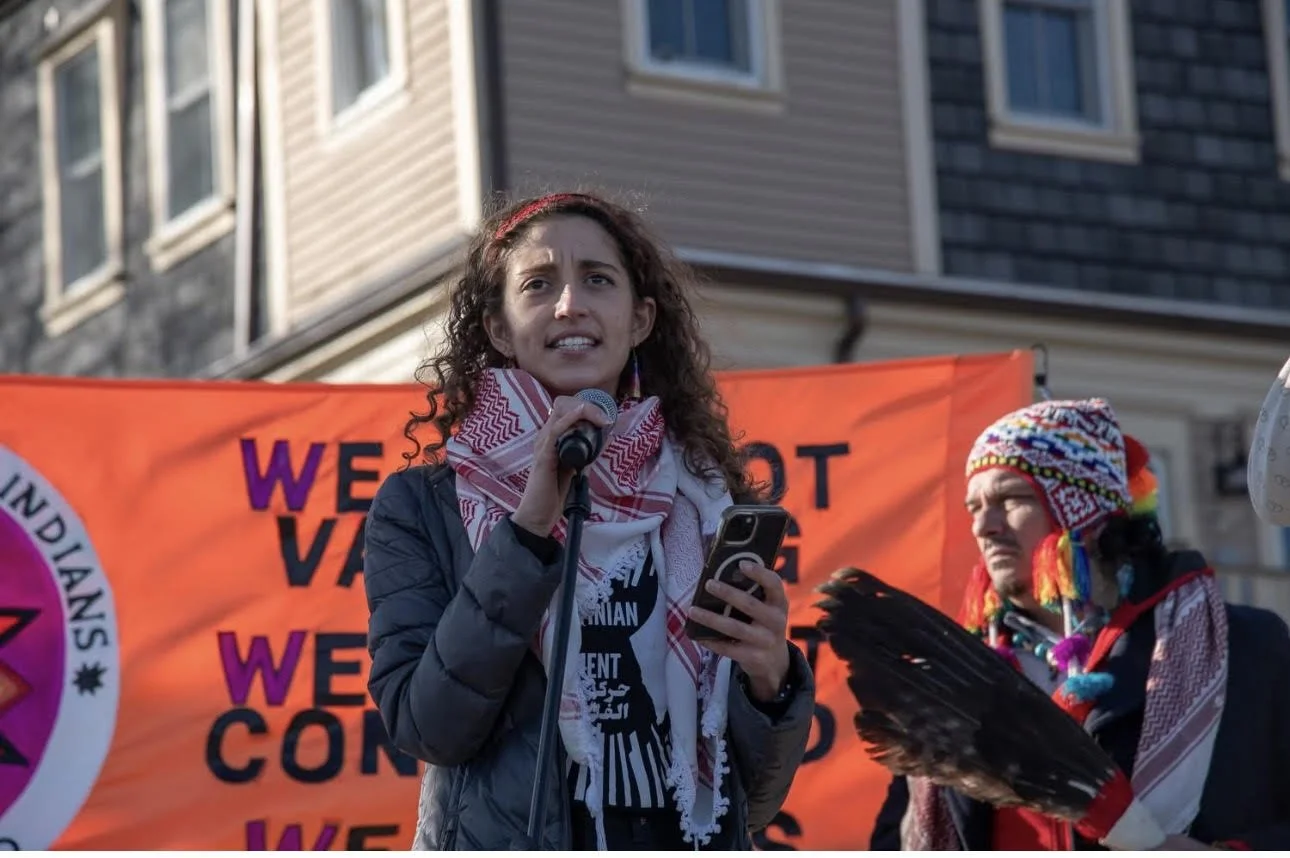
Palestinian Voices are Heard at the National Day of Mourning

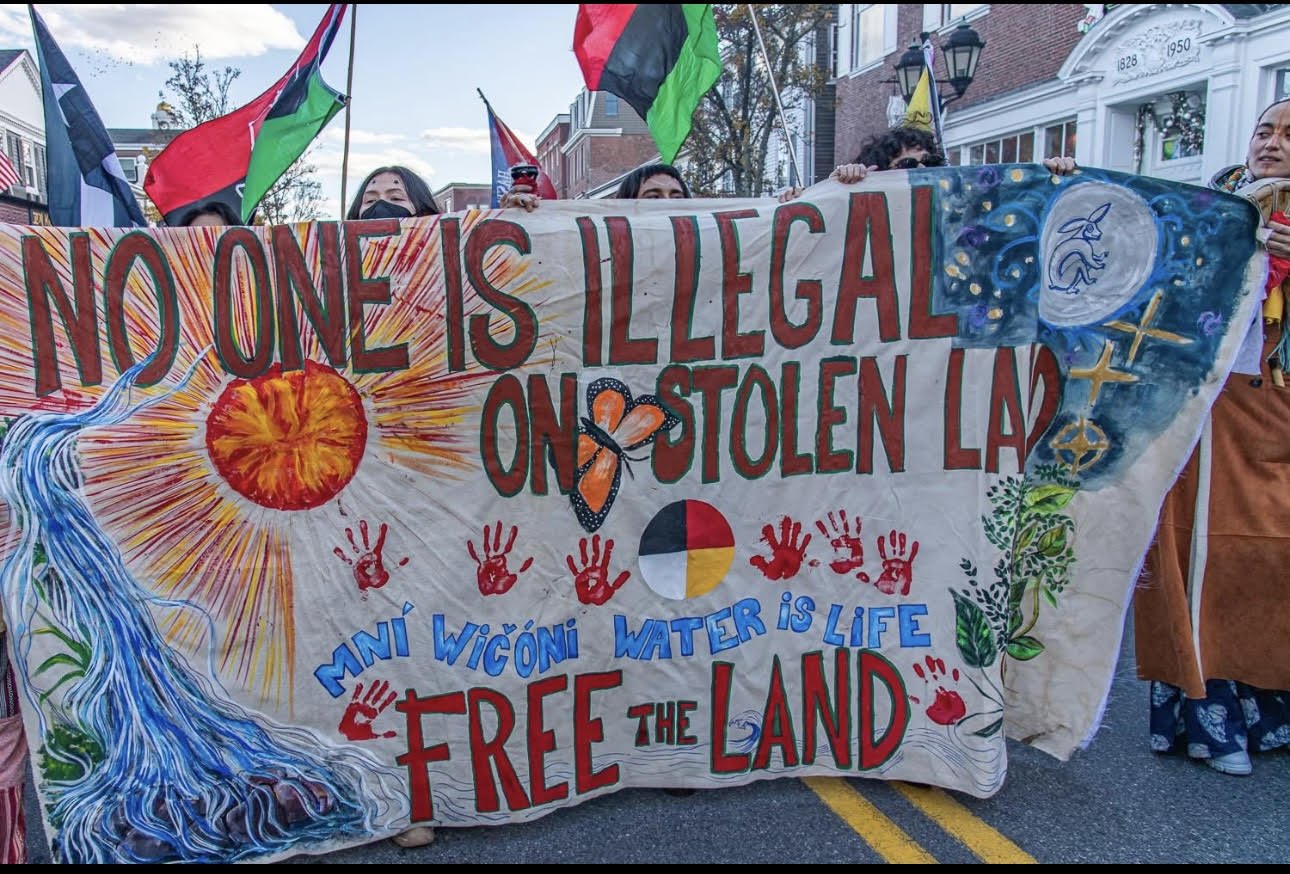
For those who don’t know: “On the fourth Thursday in November, Native Americans and supporters come together to remember the real story behind Thanksgiving. Instead of a celebration, this day is a powerful protest and remembrance, giving voice to histories often left out of national narratives. For many, it is a reminder of the loss, violence, and broken promises that began with colonization – and of the resilience that endures. The event includes speeches, prayers, and a march through Plymouth, spotlighting Indigenous rights and the need for justice.” (from Awareness Days)

———

Excerpts from a speech by Lea Kayali from the Palestinian Youth Movement:

 Colonialism robs us of mourning itself, because it rids us as indigenous people from our roots and supplants an ongoing structure of violence. It is a genocide factory that breaks our bones, steals our land, and criminalizes our existence..

When we mourn publicly during colonial onslaught-as we do today, we force the world to bear witness to the glorious lives that our people lived. ..

We honor the martyrs even and especially when those in power want to erase them from the pages of history. awe see this i. the war waged on children both against native kids and Palestinian ones. 

We mourn the unmarked graves that thousands of native children,abused and killed in boarding schools were laid to rest at. And we also mourn the thousands of Palestinian children buried under rubble. But when we mourn we remember their names, the tenor of their lives, the space left in the heart of their families. From Hind Rajab, the six year old Palestinian whose last cry for help haunted the world to John Parkour, the Ojibway boy who was stolen from White Earth Reservation, we will honor all our martyrs. 

But the fragility of life is the tender underbelly of the lion of resistance...

When I spoke last year, I said that to be indigenous is to hold a sacred, prophetic relation to our lands..'

We have a legacy to uphold. Whenever. as a Palestinian, I fear our cultural extinction, I remember how the Kanaka Mahi resisted the near elimination of their language, and in the span of a couple decades raised an entire generation of speakers. I remind myself of the Wampanoag Language Reclamation Project that revitalized the ancestral language of this very land.

And as our comrades in the Red Nation sa, for our earth to live capitalism and colonialism must die.

Lea Kayali

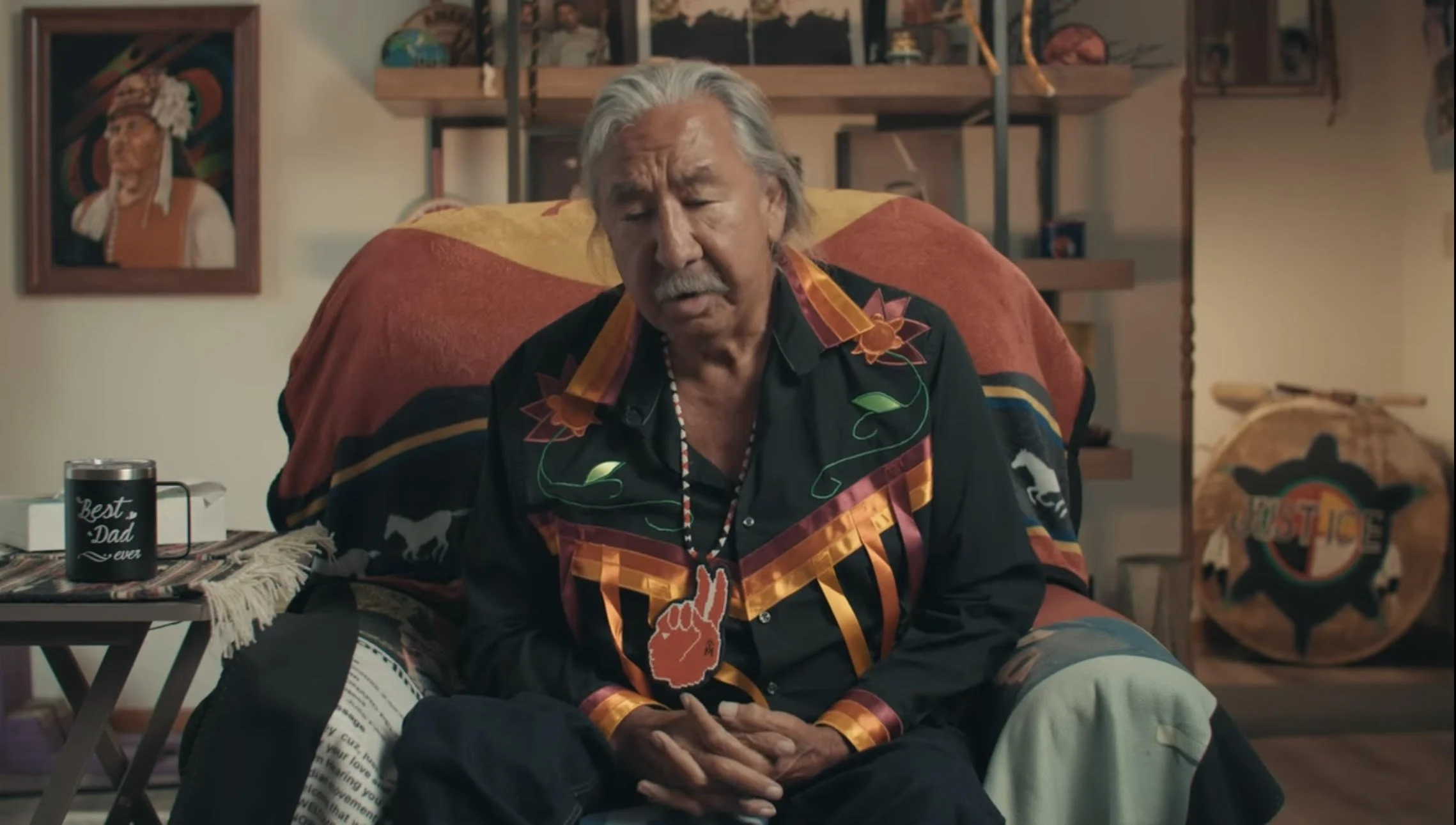
Leonard Peltier spoke to the gathering via UAINE livestream and a a written message.

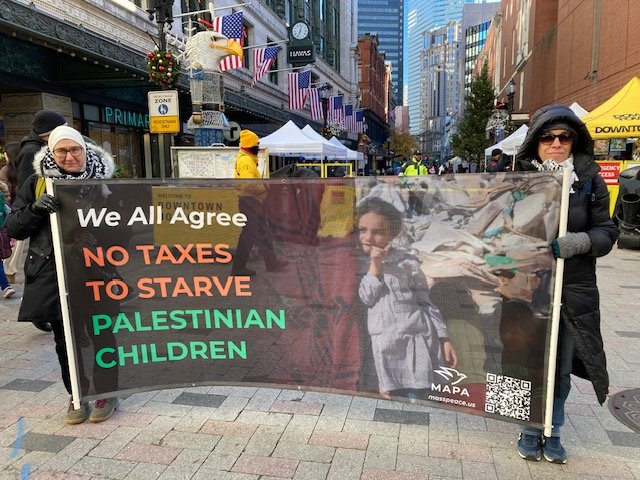
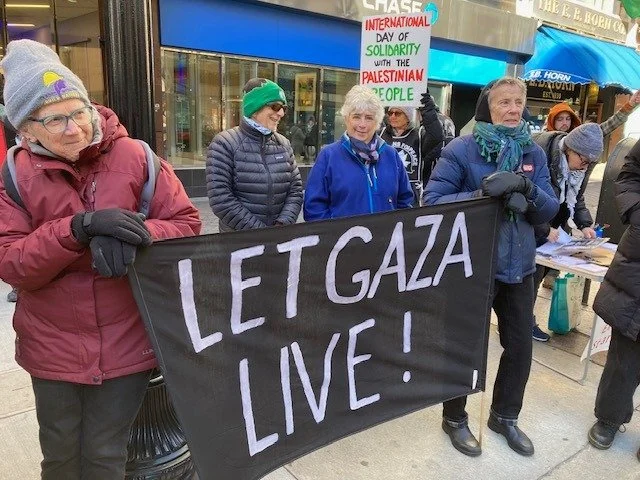
The Alliance & Mass Peace Action Stand out on the International Day of Solidarity with the Palestinian Peop

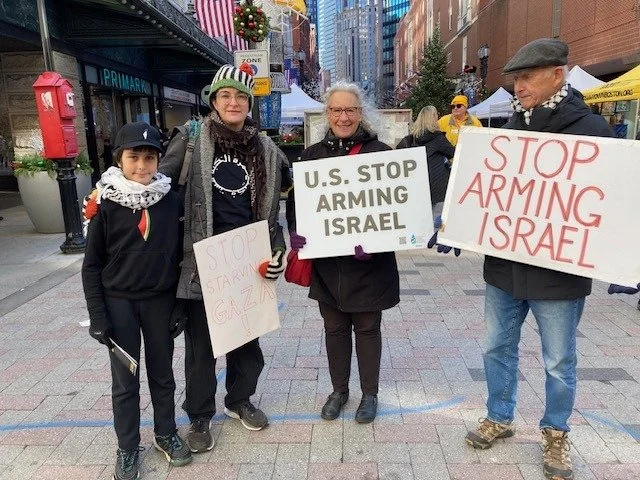
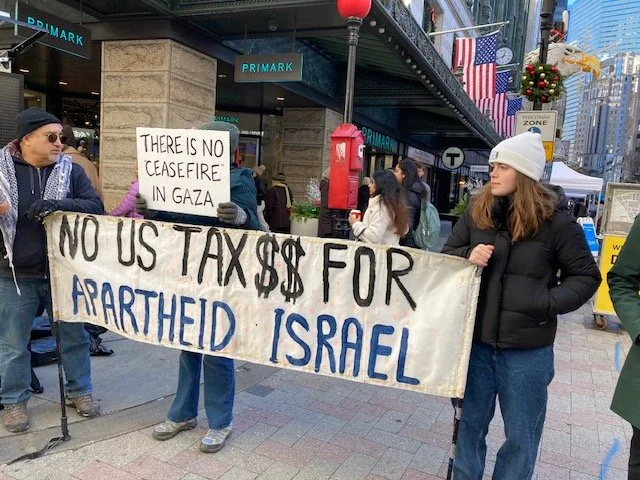
"Don't be fooled - there is no 'ceasefire' in the Gaza Strip!" This is the message that the Alliance and Mass Peace Action conveyed to the public during their stand out in Boston's Downtown Crossing on Nov. 29, the International Day of Solidarity with the Palestinian People. They gave out 400 flyers letting the public know that some 350 Palestinians have been killed by Israeli bombardments since the US-engineered 'ceasefire' began on Oct. 10. And still only a third of the amount of food and water stipulated by the 'ceasefire' agreement is permitted by Israel to enter the Gaza Strip. The genocide is ongoing, made possible by our tax dollars and weapons. In 2024 alone the US gave Israel $22 billion to destroy Gaza - we must push for a total arms embargo on Israel!

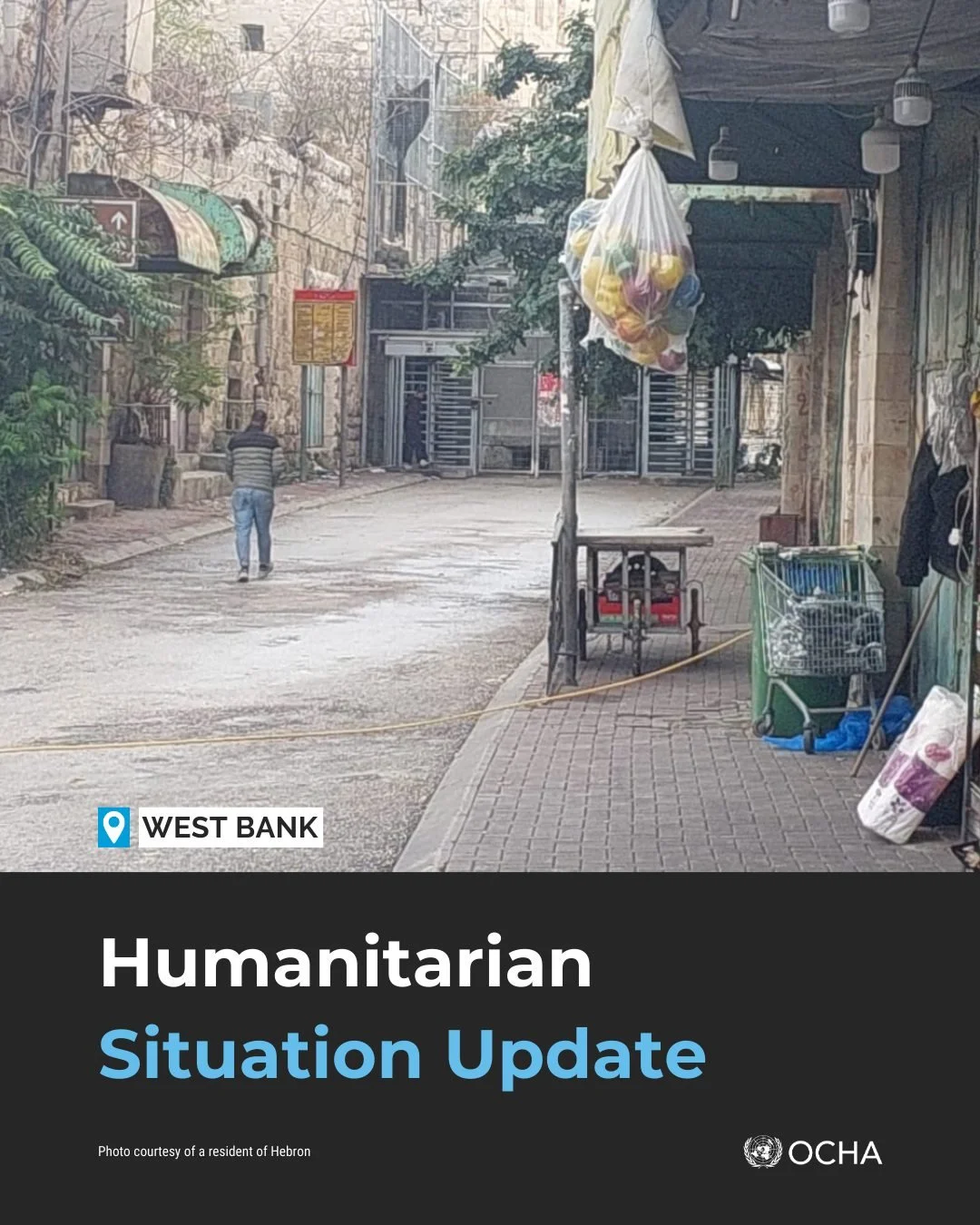
Humanitarian Situation Update #343 | West Bank

Across the West Bank, violence continues at alarming levels, with more people getting killed and injured by the day.

Amid a deep economic downturn, Palestinians trying to reach workplaces in East Jerusalem or Israel are regularly coming under fire. Since October 2023, fourteen Palestinians have been killed by Israeli forces while attempting to cross the Israeli Barrier, and more than 200 have been injured.

New figures show that, so far in 2025, more than 1,000 Palestinians have been injured in settler attacks – more than double the total for all of 2024.

Meanwhile, harsh movement restrictions are blocking access to workplaces and essential services. Most recently, these restrictions intensified in Hebron, affecting thousands.

Read more in our latest update: https://www.ochaopt.org/.../humanitarian-situation-update...

An Israeli checkpoint, kept closed since 23 November 2025, outside Ash Shuhada Street in the H2 area of Hebron city. Photo courtesy of a resident.