Israeli settlers consume seven times more water than Palestinians

Water expert Jad Isaac tells Al Jazeera that Palestinians are trapped buying 100 million cubic metres (26 billion gallons) of water annually from Israel while their own springs are seized to force displacement.

ByMohammad Mansourand Givara Budeiri

Published On 5 Jan 20265 Jan 2026

In the eastern occupied West Bank, the al-Auja spring has flowed for centuries, serving as one of the largest and oldest water basins in Palestine.

But Palestinian families who have relied on it for generations say Israeli settlers are effectively stealing the water, creating a crisis that experts are calling “water apartheid“.

An Israeli settlement outpost now stands between the villagers ofal-Auja and their water source. Residents report that settlers have fenced off the area and installed pumps that siphon water directly from the aquifer, leaving Palestinian pipes dry.

“The settlers banned us,” Salama Kaabneh, the mukhtar (chief) of the Kaabneh clan, told Al Jazeera Arabic’s Givara Budeiri. “There is a motor pulling water from the same basin … 800 metres [2,625 feet] deeper than the spring’s opening.”

A systemic imbalance

In an interview with Al Jazeera, Jad Isaac, director of the Applied Research Institute-Jerusalem (ARIJ), revealed the staggering scale of inequality created by Israeli military control over water resources.

“The Israeli settler consumes approximately seven times the amount of water a Palestinian citizen gets,” Isaac said.

“The Palestinian individual’s share does not exceed 80 litres [21 gallons] per day,” he explained, noting that in some marginalised communities, that drops to below 15 litres [4 gallons] –  “far below the global minimum recommendation of 100 litres per day”.

This inequality is visible from the sky. Drone footage obtained by the Reuters news agency reveals withered, brown Palestinian greenhouses sitting adjacent to lush, green settlement agriculture that thrives on the seized water.

The ‘Oslo trap’

With their natural springs seized or blocked, Palestinians have fallen into what Isaac describes as a “trap” set by the Oslo Accords.

Save

“Israel refused to negotiate on Palestinian water rights … replacing the issue by demanding Palestinians submit their needs to the Israeli side, which then sells it to them,” Isaac said.

He noted that the Palestinian Authority is now forced to purchase more than 100 million cubic metres (26 billion gallons) of water annually at market price from Israeli companies—effectively buying back their own natural resources.

Isaac said that under military orders, Israel has taken “full control” of water sources, citing recent moves to establish a “crimson wall” in the northern Jordan Valley to further separate Palestinian communities from their agricultural lands.

‘Slow displacement’

Rights groups warn that this engineered thirst is a strategic method to force Palestinians to abandon their homes.

According to data provided by ARIJ to Al Jazeera, more than 56 water springs in the West Bank have been subjected to repeated settler attacks or takeovers.

“The seizure of springs … indicates a clear shift from merely controlling resources to using water as a direct pressure tool on the population,” Isaac warned.

“Many families are pushed into internal or external migration due to the loss of livelihoods, which constitutes a slow displacement of rural Palestinian communities.”

‘We have returned to the wells’

The seizure of water resources appears to have explicit backing from the Israeli government.

In a video circulating widely online, Israeli Finance Minister Bezalel Smotrich has praised settlers for taking physical control of the springs.

“I see the results of your wonderful work. We have returned to the water wells and regained control over all these areas,” Smotrich is heard saying in the viral clip. “It is a pleasure to tour here. You are heroes; keep up your work.”

While the minister cheers, Palestinian infrastructure is being dismantled.

“Israel prevents Palestinians from building dams to collect rainwater and imposes restrictions on work in Area C,” Isaac noted, adding that the separation wall alone has isolated 31 Palestinian artesian wells.
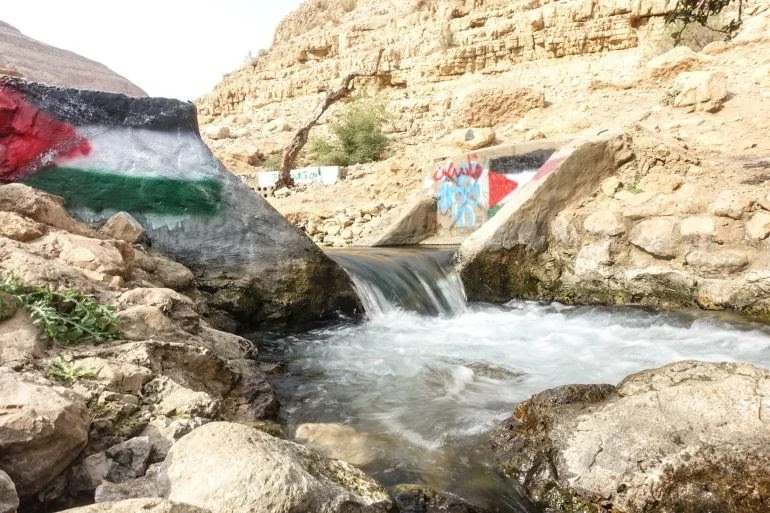
Palestinians are now prohibited from accessing the spring that feeds the town of al-Auja in the occupied West Bank's Jericho governorate [Al Jazeera]
Gaza Humanitarian Response Situation Report. January 6, '26

HIGHLIGHTS

  • Fuel shortages and road closures severely slowed the humanitarian response in December. While fuel deliveries have resumed, ongoing access restrictions, congestion, and storage gaps continue to drive up costs and delay assistance.

  • As of 4 January, partners were able to resume full monthly food rations distributions for the first time since October 2023, reaching 100,000 people.

  • Since the October ceasefire, 35 health service points were reactivated and 25 new ones established, including 12 primary health care centres, with most being located in northern Gaza.

  • Temporary Learning Spaces (TLSs) expanded to 424 sites, including two TLSs that opened between 3 and 4 January. The TLSs are now serving more than 232,000 children with about 5,550 teachers.

SITUATION OVERVIEW

Israeli airstrikes, shelling and gunfire continued to be reported across the Gaza Strip between 3 and 5 January with casualties reported. According to the Gaza Ministry of Health, 16 Palestinians were killed and 28 others injured across the Gaza Strip over the last 72 hours.

On 30 December 2025, 37 international non-governmental organizations (INGOs) were officially notified by an Israeli interministerial committee that their registrations would expire on 31 December 2025, triggering a mandatory 60-day wind down period. These INGOs are integral to food, shelter, health, and nutrition services across the occupied Palestinian territory, and this development may force them to cease operations unless registrations are renewed.

UNITED NATIONS-COORDINATED AID ENTRY*

Between 30 December and 5 January, at least 17,534 pallets of aid administered by the UN and its partners were offloaded at Gaza’s crossings, based on data retrieved from the UN 2720 Mechanism dashboard at 15:00 on 6 January. About 72 per cent of these pallets contained food, followed by water, health and sanitation (WASH) items (15 per cent), shelter supplies (8 per cent), health items (4 per cent), and others, including nutrition and protection aid, as well as fuel (less than 1 per cent).

Between 31 December and 5 January, UNOPS international monitors deployed at Gaza’s crossings verified the collection of at least 15,243 pallets of aid – 8,712 from Kerem Shalom Crossing and 6,531 from Zikim Crossing. These comprised inter alia 12,497 pallets of food assistance, including 3,691 pallets of nutrition supplies; 1,448 pallets of WASH supplies, 319 pallets of shelter items including tents, clothing, kitchenware and bedding items; and eight pallets of health supplies. Monitoring missions to Zikim were denied access on 1 and 4 January and no humanitarian cargo was collected on 2 January.

The above data excludes bilateral donations and the commercial sector.

Salah ad Deen Road remains closed to humanitarian convoys uplifting cargo from Karem Shalom crossing, forcing humanitarian convoys to use the Philadelphi and Al Rasheed roads, resulting in severe congestion and delays. Due to irregular truck routing, frequent supplier cancellations, and denials of movement requests, transportation costs have increased. Additionally, the lack of appropriate storage facilities has caused some goods to spoil, undermining the efficiency and effectiveness of the response.
 

HUMANITARIAN RESPONSE

The below are preliminary updates shared by Clusters at the time of reporting and will be reconciled and aggregated in the coming days as Clusters receive more data from the capillary network of partners active on the ground.

Food Security

  • As of 4 January, Food Security Sector partners had reached 20,000 families (100,000 people) with monthly general food assistance via 50 distribution points with a ration size adjusted to two food parcels and two 25-kilogram bags of flour. These rations are covering 100 per cent of the minimum caloric needs for the first time since October 2023 thanks to sufficient stock.

  • Hot meal distribution continues. As of 3 December, 25 partners delivered 1,627,000 hot meals through 209 kitchens: 452,000,000 meals by 49 kitchens in northern Gaza and 1,175,000 meals by 160 kitchens in southern Gaza.

Health

  • Since the ceasefire and as of 31 December, health partners reactivated 35 health service points and established 25 new ones, including 12 primary health care centres. This expansion increased the availability of partially functioning health service points across the Gaza Strip from 33 per cent before the ceasefire to 40 per cent since the ceasefire. About 70 per cent of these newly established or re-opened facilities are in northern Gaza.

  • Despite these improvements, two major challenges persist. First, 55 per cent of active health partners are international NGOs, and any de-registration would severely disrupt access to essential health services. Second, disruptions in the fuel supply threaten the continuity of care across all hospitals and primary health care centres, putting lifesaving operations at risk.

  • On 5 January, WHO facilitated the evacuation of 18 patients and their 36 companions from Kerem Shalom Crossing for medical treatment outside Gaza.

Shelter

  • Between 3 and 4 January, Shelter Cluster partners reached almost 16,400 families with life-saving shelter and non-food item assistance across Deir al Balah, Gaza city and North Gaza Governorate.

  • In Deir al Balah, partners delivered 435 tents to families in urgent need of shelter. In addition, 1,764 blankets and 1,764 mattresses were distributed to 294 households to address urgent winter needs. Partners provided clothing assistance to 489 vulnerable households in Gaza city and North Gaza, and 732 framing kits were delivered to support the safety and stability of makeshift shelters, reaching 732 families.

  • About 2,000 tarpaulins were distributed in Gaza city and North Gaza, while 2,000 blankets were distributed to families across the Strip aiming to strengthen protection against harsh weather conditions and improve living conditions for affected people.

  • As part of an intersectoral joint response to rainstorm incidents, 1,792 tents were distributed to 1,792 families across the Gaza Strip, along with by blankets and tarpaulins. This integrated package provided urgent shelter solutions for families whose homes were severely affected by heavy rainfall, ensuring immediate relief and improved resilience against further weather-related challenges.

Water, Sanitation and Hygiene

  • WASH Cluster partners continue maintenance work at the Azqoula Booster Station in Gaza city, which is expected to be completed by the end of January. The project involves installing an online booster station with a capacity of 450 cubic metres per hour. Once completed, this will significantly improve water pressure in the main and transmission networks, ensuring that the Mekorot pipeline water reaches wider areas with adequate pressure, particularly in Sheikh Radwan and western Gaza city.

  • Water trucking operations continue, with 36 partners distributing daily more than 21,500 cubic metres of drinking water and 10,400 cubic metres of domestic water to 2,350 water collection points across the Strip.

  • In December, 12 partners installed 1,192 communal latrines and 1,003 household latrines in 105 locations across the Strip. However, this remains far below the required target of 10,000 latrines per month, primarily due to shortages of latrine slabs and other critical supplies needed for installation in high-priority areas.

Protection

  • Protection and protection-linked activities continued across the Strip on 3 and 4 January, reaching at least 2,900 people. Core support included psychosocial support (PSS) and risk awareness interventions. Adult-focused group PSS sessions reached 110 people, complemented by large-scale mental health and psychosocial support (MHPSS) and awareness activities benefiting more than 2,166 people. These included Psychological First Aid (PFA) for 34 people, emotional release sessions for 1,198 participants, structured and unstructured PSS for 385 people, group and individual counseling for 120 people, and protection awareness sessions reaching 1,652 people.

  • Specialized and disability-inclusive services were also provided, including speech therapy for 85 children, physiotherapy for 19 persons with disabilities or war-related injuries, and individual case management for 63 people. In addition, cash assistance supported 143 vulnerable households, while significant winterization efforts, such as clothing parcels, blankets and vouchers, benefited several thousand people, with distributions still ongoing.

  • Child Protection

    • Between 3 and 5 January, Child Protection (CP) partners reached at least 6,000 children and more than 2,000 caregivers through child protection and MHPSS services across the Gaza Strip. These figures represent a minimum aggregate reach across multiple service modalities, noting that some children and caregivers may have accessed more than one service.

    • During the same period, at least 3,500 children participated in structured and unstructured MHPSS activities, including group sessions, individual counseling, expressive arts, recreational activities and PFA. More than 1,500 caregivers and adults received MHPSS support through individual counseling, group sessions, parenting support, and stress-management activities.

    • At least 50 children received general CP case management during the reporting period, while over 2,000 children remained under ongoing case management follow-up across multiple locations. Under family tracing, reunification, and care arrangements, at least 75 follow-ups were conducted with unaccompanied and separated children to assess well-being support and monitor outcomes, including follow-up linked to cash-based assistance.

    • Through child protection awareness and community engagement initiatives, more than 1,200 children and over 1,000 caregivers and community members participated in sessions addressing child safety, prevention of family separation, and child protection risks.

    • In addition, CP partners reached at least 4,800 children with winter-related protection assistance, including blankets, jackets, winter clothing, tarpaulins and cash for protection, to mitigate cold-related protection and health risks.

    • More than 200 children and adolescents also engaged in structured recreational, arts-based, and psychosocial activities, including initiatives under the “Gaza We Want” framework, promoting expression, coping and safe participation.

  • Prevention and Addressing of Gender-Based Violence

    • Between 3 and 4 January, partners addressing gender-based violence (GBV) continued delivering multisectoral services across Gaza through women and girls safe spaces (WGSSs). These services included MHPSS, recreational activities for women and girls, case management, legal assistance, and awareness sessions on GBV and available services. During this period, 3,285 people accessed support through WGSSs.

    • The GBV Area of Responsibility partners assisted women and girls affected by recent flooding. In northern Gaza, 300 dignity kits and 5,800 menstrual hygiene management (MHM) kits were distributed to partners. In Khan Younis and Deir al Balah governorates, partners received 4,500 dignity kits, 20,000 MHM kits, and 2,100 blankets to strengthen the ongoing response. A portion of these supplies, particularly dignity kits, was allocated to the rapid response for flood-affected women and girls.

    • To maintain continuity of services, 12 partners received tents to repair and restore WGSSs damaged by storms. Severe weather remains a major challenge, as many GBV service delivery points have been destroyed, halting operations. Temporary tents have become the only viable solution to ensure service continuation.

    • Services were further expanded with the establishment of three new WGSSs: two in Gaza city and one in Khan Younis. As of 5 January, 59 WGSSs have been scaled up since the ceasefire.

  • Mine Action

    • Between 3 and 5 January, Mine Action partners conducted 12 Explosive Hazard Assessment in Khan Younis, Deir al Balah, Gaza city and North Gaza in support of rubble removal efforts and partners activities.

    • Four Explosive Ordnance Risk Education (EORE) training sessions were held for UNDP engineers.

Education

  • TLSs continue to expand across the Gaza Strip. Between 3 and 4 January, two additional TLSs were established in Khan Younis and Deir Al Balah, providing in-person learning opportunities for 203 school-aged children supported by 12 teachers. This brings the total to 424 operational TLSs, with a current capacity of 232,724 learners supported by 5,552 teachers. Scaling up TLSs remains a critical priority, however, progress is heavily dependent on the timely entry of essential supplies.

  • Renovation works are advancing in public schools. Ten classrooms, two administrative rooms and two storage facilities have been completed in two schools in Gaza city, enabling access to learning opportunities for more than 1,800 children (half of them being girls).

  • Innovative recycling efforts are underway with 10 furniture sets manufactured by recycling wooden pallets. Each set includes one table and six stools, serving 240 learners in Altaawon TLS in Khan Younis. Despite these achievements, needs remain high, and shortages of furniture and teaching/learning materials continue to pose significant challenges. The Cluster continues to encourage partners across sectors to donate wooden pallets for recycling into furniture to scale up production.

* All figures solely refer to UN and partner assistance dispatched through the UN-coordinated system. They are preliminary and will be reconciled in the course of the ceasefire. Supplies entering through bilateral donations and the commercial sector are not reflected.

U.N. Office for Coordination of Humanitarian Affairs occupied Palestinian Territory

New report and snapshot on humanitarian response during the second month of the ceasefire

5 January 2026

Dear partners,

Today, we release a narrative report and a snapshot (infographic) on humanitarian response delivered by the UN and its partners during the second month of the October 2025 Ceasefire.

Report

Infographic

During the second month of the ceasefire, the UN and its partners: 

  • brought into Gaza nearly 85,000 pallets of humanitarian supplies;

  • served up to 1.5 million cooked meals daily and reached nearly 1.3 million people with household-level monthly general food assistance in November; 

  • supported almost 321,000 pregnant and breastfeeding women and children under five with nutrient supplements to prevent malnutrition;

  • set up 120 intensive care and emergency beds, and provided 30 anaesthesia machines and 40 portable vital-sign monitors to health facilities, alongside critical medicines and consumables; 

  • assisted over 237,750 children under the age of 11 with winter clothing kits; and

  • reached nearly 62,000 additional households with US$24 million-worth of multi-purpose cash assistance.

Despite a significant increase the volume of supplies entering Gaza, administrative and bureaucratic impediments continued during the second month of the ceasefire. These impediments slowed the response and prevented the entry of aid and restoration of services at the scale to meet immense needs following two years of intense conflict, destruction and displacement. While the amount of emergency food and nutrition supplies increased significantly, the entry of shelter items, water and sanitation equipment, agricultural inputs, construction materials and education supplies has remained limited.

An earlier report and snapshot covering the first month of the ceasefire can be found here.

We hope you find this useful.

Best regards,

OCHA OPT team