Between 17 December 2025 and 20 January 2026, one Humanitarian Situation Update is being issued every week. The next Humanitarian Situation Update on the Gaza Strip will be issued on 14 January and the next Humanitarian Situation Update on the West Bank will be issued on 21 January.
Key Highlights
The Inter-Agency Standing Committee and Spokesperson for the UN Secretary-General urged the Israeli authorities to revoke their plan to suspend the operations of many international non-governmental organizations working in the Occupied Palestinian Territory.
Severe winter weather damaged or destroyed dozens of tents and makeshift shelters in Bedouin and herding communities across the West Bank.
In 2025, more than 830 Palestinians were injured by Israeli settlers in settler attacks – an average of two Palestinians injured per day.
Over the past two weeks, Israeli authorities demolished 50 structures in Area C and East Jerusalem for lacking building permits.
Israeli authorities forcibly evicted two Palestinian families from their homes in Batn al Hawa area of Silwan, in East Jerusalem, in favour of an Israeli settler organization.
The six last remaining families were displaced from Khirbet Yanun in Nablus governorate, where they had lived for more than 60 years, due to settler attacks.
Humanitarian Developments
On 31 December 2025, the Inter-Agency Standing Committee (IASC) urged the Israeli authorities to revoke their plan to ban many of the international non-governmental organizations (INGOs) operating in the Occupied Palestinian Territory (OPT), noting that they collectively deliver close to US$1 billion in assistance each year. The Committee emphasized: “Humanitarian access is not optional, conditional or political.” Calling for this measure to be reversed, Spokesperson for the UN Secretary-General underscored that, pursuant to its obligations under international humanitarian law, Israel must allow and facilitate rapid and unimpeded passage of humanitarian relief for all civilians in need and reiterated that all humanitarian partners must be able to operate safely and in line with humanitarian principles.
Between 23 December 2025 and 5 January 2026, two Palestinians were killed by Israeli forces and 94 were injured, including 35 children, in the West Bank, including East Jerusalem. In addition, one Palestinian succumbed to wounds sustained earlier in December 2025. During the reporting period, two Israelis were killed and two were injured in Israel by a Palestinian man from the West Bank, who was injured and arrested. The following are details of the incidents that resulted in fatalities during the reporting period:
On 23 December 2025, a Palestinian man from Salfit died of wounds sustained on 14 December, after he was shot by Israeli forces while attempting to cross the Barrier to reach East Jerusalem and Israel near Ar Ram and Dahiyat al Bareed in the Jerusalem governorate.
On 26 December 2025, a Palestinian man killed two Israelis, including a woman, and injured another two, including one boy, in two consecutive attacks in Israel. According to Israeli media, a Palestinian man from Qabatiya town rammed and killed an elderly Israeli man and injured an Israeli boy with his employer’s car near Bet She'an city and then stabbed and killed an Israeli woman and injured an Israeli man in Afula city. Israeli forces shot, injured and arrested the man, and carried out an operation in the man’s hometown of Qabatiya, in Jenin governorate (see below).
On 30 December 2025, Israeli forces opened live fire at a vehicle travelling on the main road between ‘Urif and Einabus towns, in Nablus governorate, shooting and injuring four Palestinian men in their twenties, one of whom later succumbed to his wounds. According to the Israeli military, soldiers shot, killed and withheld the body of a Palestinian man, claiming that he had attempted to carry out a ramming attack against them in the area. No Israeli soldiers were reported injured.
On 1 January 2026, Israeli forces opened fire and injured two Palestinians in Al Lubban ash Sharqiyya village in Nablus governorate. One of the injured Palestinians was arrested by Israeli forces and later pronounced dead in an Israeli hospital. According to the Israeli military, its troops conducted an ambush where they shot at people throwing stones at them. The other man fled the scene.
In 2025, a total of 240 Palestinians, including 55 children (23 per cent), were killed by Israeli forces or settlers, including 225 by Israeli forces, nine by Israeli settlers, and six where it remains unknown if they were killed by Israeli forces or settlers (see graph below). During the same period, Palestinians killed 17 Israelis, including one child and six members of Israeli forces, in the West Bank. In Israel, attacks by Palestinians from the West Bank killed three Israelis and one Palestinian perpetrator, in addition to a Palestinian killed in an attack by Israelis in West Jerusalem.
Between 23 December 2025 and 5 January 2026, Israeli forces shot and injured six Palestinians with live ammunition while they attempted to cross the Barrier to reach East Jerusalem and Israel, including four near Ar Ram and Dahiyat al Bareed in Jerusalem governorate and two in Qalqiliya city. In a separate incident, on 28 December 2025, a Palestinian man from Izbat Salman village in Qalqiliya governorate, fell down while attempting to cross the Barrier near Ar Ram town. The man was transported to a hospital in Israel before being pronounced dead, and his body has been withheld by Israeli forces (not counted in the total number of Palestinians killed by Israeli forces). Since 7 October 2023, when Israeli authorities revoked or suspended most permits that had allowed Palestinian workers and others to access East Jerusalem and Israel, OCHA has documented the killing of 16 Palestinians and the injury of more than 240 others while attempting to cross the Barrier, reportedly in search of employment opportunities amid a severe economic downturn in the West Bank.
Between 23 December 2025 and 5 January 2026 Israeli forces conducted two operations in Jenin governorate, resulting in displacement, movement restrictions and injuries. On 26 December, Israeli forces carried out a one-day operation in Qabatiya town, in Jenin governorate, the hometown of a Palestinian who killed two Israelis and injured two others in Israel (see more details above). Israeli forces raided multiple neighbourhoods, imposed a curfew, conducted field interrogations, and ordered shops to close. The family home of the man was raided and sealed, displacing five people (On 4 January, Israeli forces again raided Qabatiya town and delivered a military order to demolish the same house within 72 hours). Additionally, at least two multi-storey buildings and five houses in different locations across the town were taken over as military posts, displacing nearly 15 families, comprising about 75 people. Israeli forces blocked five of the town’s seven entrances with earth mounds, severely restricting movement, while ambulances were allowed to enter and exit the town via longer, alternative routes and only following coordination with the Palestinian District Coordination Liaison (DCL). In another 10-hour operation on 31 December, Israeli forces raided Jaba’ town, southwest of Jenin city, searched homes, forcibly evacuated two families, and converted one house into a field interrogation centre. Approximately 50 Palestinians, including the head of the village council, were arrested and interrogated, of whom four were physically assaulted and injured by Israeli forces.
Between 28 and 30 December 2025, severe winter weather, including heavy rainfall, strong winds and flash flooding, affected vulnerable communities across large parts of the West Bank. On 29 December 2025, the Palestinian Civil Defense reported 115 incidents over an 11-hour period, including firefighting and rescue incidents across multiple governorates. Moreover, dozens of shelters and makeshift structures in Bedouin and herding communities sustained damage by flooding and storms – many of these families had already experienced repeated displacement due to settler violence and access restrictions, leaving their shelters fragile and highly exposed to weather hazards. Between 28 and 30 December 2025, OCHA triggered emergency response to assist at least 66 households (about 300 people) in 18 mainly herding and Bedouin communities who had their residential tents, livestock barracks, fodder storage and animal shelters damaged or destroyed. In several cases, structures that had been recently reconstructed following settler attacks were again damaged or rendered unusable.
Under the 2026 Flash Appeal, approximately 63,000 people in the West Bank are targeted with emergency shelter assistance, including inter alia urgent shelter rehabilitation and weatherproofing works to protect vulnerable households from extreme weather as well as assistance to families displaced or affected by demolitions, forced evictions, or military incursions. Activities include the distribution of temporary shelter solutions, rental support, structural repairs and insulation, and the provision of essential seasonal items such as heaters and blankets, prioritizing families in damaged or exposed shelters.
Demolitions and Evictions
On 31 December 2025, Israeli forces began demolishing 25 buildings in Nur Shams refugee camp, in Tulkarm governorate, which were targeted with demolition in an order issued by the Israeli military on 14 December. According to local community sources, Israeli authorities rejected a legal request submitted on behalf of the families to suspend the demolitions that targeted both single-family houses and multi-unit residential buildings, affecting approximately 70 households, all of whom had already been displaced from the camp. The structures are largely located in and near Jabal As Salhin, Al Manshiyeh, and Al Maslakh neighbourhoods. Already in May 2025, according to a preliminary analysis of satellite imagery conducted by the United Nations Satellite Centre (UNOSAT) that had not been validated in the field, a total of 280 structures had been destroyed or damaged in Nur Shams Camp, or about 35 per cent of all structures. Since then, Israeli forces have continued to carry out demolitions in Nur Shams Camp, as well as Jenin and Tulkarm camps, but the areas have remained inaccessible for further assessments.
Between 23 December and 5 January, OCHA documented the demolition of 50 Palestinian-owned structures for lacking Israeli-issued building permits, which are almost impossible for Palestinians to obtain. Twenty-seven (27) of the structures were in East Jerusalem and 23 were in Area C of the West Bank. In total, 53 Palestinians, including 28 children, were displaced and more than 14,000 people were otherwise affected. The demolished structures included 10 residences (of which seven were inhabited), 31 agricultural and livelihood structures, and nine water and sanitation and other structures. Among the demolished structures were walls surrounding a children’s park in Al Mughayyir village in Ramallah governorate, where the land was also bulldozed and about 100 saplings uprooted, and 23 shops, signboards, kiosks and other commercial structures in Kafr ‘Aqab, in East Jerusalem, during a 12-hour operation by Israeli forces that also resulted in the injury of 24 Palestinians and the destruction or confiscation of large quantities of commercial equipment, tools and other property.
Eleven of the 20 structures demolished in Area C of the West Bank during the reporting period were demolished by Israeli authorities in Az Za’ayyem Bedouin community, in Jerusalem governorate, on 24 December; eight were agricultural structures and three were residential shelters. The demolition displaced 31 Palestinians, including 17 children, and affected 17 additional people, including six children. Az Za’ayyem Bedouin is among 18 communities of over 4,000 people residing in an area designated for the E1 settlement plan in eastern Jerusalem governorate by Israeli authorities to create a continuous built-up area between Ma’ale Adumim settlement and Jerusalem. Since the Israeli government decided to proceed with the E1 settlement expansion plan in late August 2025, a total of 15 structures have so far been demolished, all in Az Za’ayyem Bedouin community.
On 24 December, Israeli forces bulldozed on punitive grounds a one-storey residential house in Bizzariya village, northwest of Nablus city, displacing four people, including a child. The house belonged to the family of one of two Palestinians who stabbed and killed an Israeli security guard outside a supermarket at the Gush Etzion settlement Junction in Bethlehem governorate on 10 July, before they were both killed. During the demolition, the Israeli bulldozer destroyed the entrance of another house, affecting eight people, including four children.
On 4 January 2026, the Israeli police forcibly evicted two Palestinian families from their two-storey residential building (containing two apartments) in the Batn Al Hawa area of Silwan, in East Jerusalem. As a result, eight people, including three children, were displaced, in favour of the Israeli settler organization Ateret Cohanim. According to the family, in November 2025, the Israeli Supreme Court rejected their appeal against the eviction. The family subsequently filed another petition and had a hearing scheduled for 21 December 2025. However, prior to the court’s ruling, the Israeli Enforcement and Collection Authority issued a final eviction notice, ordering the family to vacate the property by 5 January 2026. Following the eviction, Israeli settlers took over the building, sealed its doors and windows with metal sheets, and raised Israeli flags on the structure.
This is the sixth eviction incident in Batn al Hawa since February 2024, which in total resulted in the displacement of 13 Palestinian families comprising 57 people, including 27 children. These families are among more than 90 families in Batn al Hawa, comprising over 450 people including about 200 children, who have been at risk of forced displacement due to eviction cases filed against them by Ateret Cohanim settler organization. Evictions have grave physical, social, economic and emotional impact on Palestinian families concerned. In addition to depriving the family of a home – its main asset and source of physical and economic security – evictions frequently result in disruption in livelihoods, increased poverty and a reduced standard of living. The high legal fees families incur when defending a case in court further strain already meagre financial resources. The impact on children can be particularly devastating, including post-traumatic stress disorder, depression, anxiety and diminished academic achievement. Moreover, the establishment and continued presence of settlement compounds within Palestinian areas have significantly affected the daily lives of Palestinian residents, contributing to an increasingly coercive environment that may place additional pressure on them to leave. The main elements of this environment include increased friction; restrictions on movement and access; and a reduction on privacy due to the presence of private security guards and accompanying surveillance cameras.
Israeli Settler Attacks
Between 23 December 2025 and 5 January 2026, OCHA documented 44 Israeli settler attacks against Palestinians that resulted in casualties, property damage or both. The attacks led to the injury of 33 Palestinians, including 11 children; 28 were injured by Israeli settlers and five by Israeli forces. During the same period, settler attacks led to the large-scale displacement of the entire Palestinian herding community of Khirbet Yanun, in Nablus governorate (see below). In multiple attacks, Israeli settlers targeted Palestinian residential structures, as illustrated in the following examples:
On 24 December, in Al Mazraa ash Sharqia in Ramallah governorate, Israeli settlers set fire to a Palestinian-owned residential building under construction, damaging its staircase, doors and façade, and sprayed slogans in Hebrew on the walls.
On 27 December 2025, in Hammamat al-Maleh herding community in Tubas governorate, Israeli settlers attempted to trespass into residential shelters, vandalized at least two structures, destroyed furniture and water tanks, and physically assaulted a family, injuring a 12-year-old child. Israeli forces subsequently arrived, arrested four family members, and delayed ambulance access to the injured child for several hours.
On 3 January, Israeli settlers from a nearby outpost attacked a house in Burin village in Nablus governorate, throwing stones that broke windows and struck a 16-year-old boy on the head, further exacerbating fear among two families residing in the building, which has been repeatedly targeted.
On 3 January, Israeli settlers broke into the shelter area of a family in East Taybeh Bedouin community in Ramallah governorate, damaging and stealing a metal gate and intimidating nearby households, amid an escalation of attacks following the establishment of a settlement outpost adjacent to the community.
On 3 January, Israeli settlers broke into and vandalized a secondary residence on the northern outskirts of Sinjil village in Ramallah governorate, destroying furniture and household property.
In one key incident on 26 December, Israeli settlers, believed to be from a settlement outpost on the southern outskirts of Deir Dibwan village in Ramallah governorate, carried out two consecutive attacks against Palestinians and their property in Area B of the village. According to community sources and video footage, the first attack occurred at about 01:00, when a group of masked Israeli settlers, some armed, cut the electricity supply and broke into a Palestinian-owned farm. The settlers assaulted two workers while they were sleeping, tied their hands and feet, and stole 148 sheep before fleeing towards the nearby outpost. The second attack took place around noon time on the same day, when dozens of masked settlers, some armed, attacked Palestinians who were ploughing their land and others who had gathered near the farm following the earlier incident. During the attack, settlers fired live ammunition, injuring one man with bullet shrapnel in the leg, and physically assaulted nine Palestinians, including four children and a 70-year-old man, using clubs and metal chains. In total, settlers injured 12 Palestinians and stole livestock, two agricultural tractors and two other vehicles.
On 28 December 2025, following a series of settler attacks and intimidation, the six last remaining Palestinian families comprising 22 people, including two children and 11 women, were displaced from Khirbet Yanun in Nablus governorate, where they had lived for more than 60 years. According to community sources, the displacement followed repeated attacks by Israeli settlers from Itamar settlement and nearby settlement outposts, targeting residents and their property, blocking their access to grazing areas, preventing them from planting fodder crops, and restricting their access to agricultural areas, including olive groves. On 21 December, settlers took over two of the village’s abandoned houses as well as bulldozed and ploughed parts of Sahel Yanun that had already been cultivated by Palestinians, causing damage to 130 dunums (32 acres). These attacks also disrupted access to education, with teachers reporting repeated harassment by Israeli settlers and Israeli forces while commuting to and from the community. Amid ongoing threats by Israeli settlers, the Palestinian Ministry of Education temporarily relocated 16 students (Grades 1–6) and six staff members to a neighbouring school in Aqraba. The families were displaced over the course of several days, with the last remaining family reportedly given a seven-hour deadline to leave on 28 December. Following the full displacement of the community, Israeli forces installed a road gate, blocking access to the area.
In 2025, OCHA has documented over 1,800 settler attacks that resulted in casualties or property damage in about 280 communities across the West Bank, primarily in Ramallah, Nablus and Hebron governorates. This is an average of five incidents per day, marking the highest daily average since OCHA began recording such incidents in 2006. These attacks have resulted in the injury of 1,190 Palestinians, including 838 (70 per cent) injured by Israeli settlers, 339 (28 per cent) by Israeli forces, and 13 where it remains unknown whether they were injured by Israeli settlers or forces. Of the 838 Palestinians injured by Israeli settlers in 2025 – an average of two Palestinians injured per day – nearly 60 per cent were in Ramallah (267 injuries) and Hebron (223) governorates.
For key figures and additional breakdowns of casualties, displacement and settler violence between January 2005 and November 2025, please refer to the OCHA West Bank November 2025 Snapshot.
Funding
As of 6 January 2026, Member States disbursed approximately $1.6 billion out of the $4 billion (40 per cent) requested to meet the most critical humanitarian needs of 3 million out of 3.3 million people identified as requiring assistance in Gaza and the West Bank, including East Jerusalem, under the 2025 Flash Appeal for the OPT. On 8 December 2025, the UN and its humanitarian partners launched a Flash Appeal for $4.06 billion to address the humanitarian needs of 2.97 million out of 3.62 million people identified as requiring assistance in Gaza and the West Bank, including East Jerusalem, in 2026. Nearly 92 per cent of those required funds are for the humanitarian response in Gaza, with just over eight per cent for the West Bank. In December, the oPt Humanitarian Fund managed 111 ongoing projects, totalling $61.1 million, to address urgent needs in the Gaza Strip (89 per cent) and the West Bank (11 per cent). Of these projects, 54 are being implemented by international NGOs, 44 by national NGOs and 13 by UN agencies. Notably, 48 out of the 67 projects implemented by international NGOs or the UN are being implemented in collaboration with national NGOs. For more information, please see OCHA’s Financial Tracking Service webpage and the oPt HF webpage.
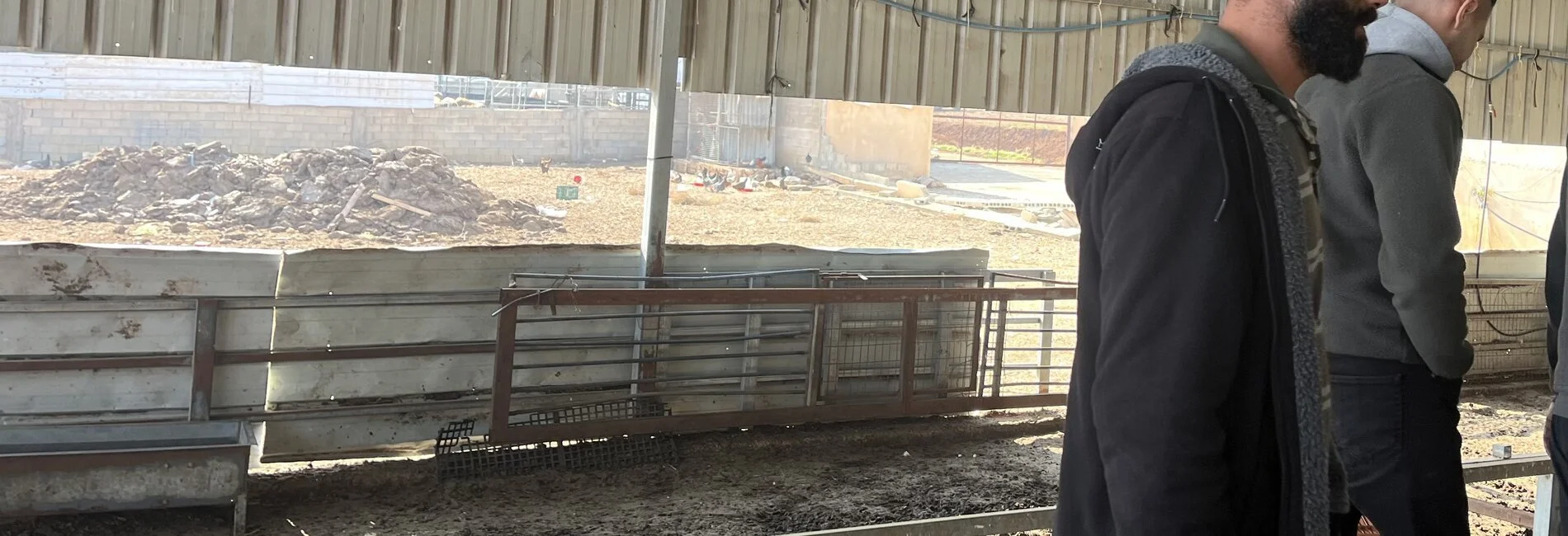
One of 12 Palestinians injured by Israeli settlers in Deir Dibwan, Ramallah governorate, on 26 December 2025. The man was beaten while guarding livestock overnight, with his hands and feet tied, as settlers stole nearly 150 sheep. Photo by OCHA