The occupied West Bank including East Jerusalem
In the early hours of 25 January, what remained of the UNRWA headquarters compound in East Jerusalem caught fire. This followed the large-scale demolition of structures inside the compound by Israeli authorities on 20 January, which was widely condemned by the international community.
On 27 January, water and electricity supplies were cut to UNRWA facilities inside Shu’fat Camp, which is the only refugee camp within what the State of Israel considers as the municipal boundary of East Jerusalem. With more than 16,000 registered Palestine Refugees residing in the camp, this marks the latest instalment in the implementation of anti-UNRWA laws by Israeli authorities, in breach of rulings by the International Court of Justice.
| The Gaza Strip
Despite the ceasefire, UN partners continue to report significant military activities including killing of civilians in Israeli aerial attacks, shelling, and gunfire across all five governorates of the Gaza Strip, including incidents both far from and in the vicinity of the “Yellow Line”. According to the Ministry of Health (MoH) as reported by OHCHR, 477 Palestinians have been killed in Israeli attacks in Gaza since the ceasefire began in October 2025.
According to WFP’s latest Market Monitor (December 2025), while Gazan household consumption patterns improved in December, one in four households are reported to consume only one meal a day.
According to UNICEF, for the first time in more than two years, nearly 5,170 recreational kits comprising notebooks, pencils, erasers, and crayons, entered Gaza and will support the learning of more than 375,000 children.
According to the MoH, at least nine children have died of hypothermia in Gaza this winter. UNRWA calls for urgent solutions including allowing the entry of batteries, solar panels, and other energy sources that are needed to set up communal heating spaces.
By 25 January, UNRWA had vaccinated 2,087 children during the 10-day vaccination campaign carried out in coordination with the Ministry of Health, WHO, and UNICEF. UNRWA is participating through 23 health facilities and 35 medical teams.
Read the whole report here.
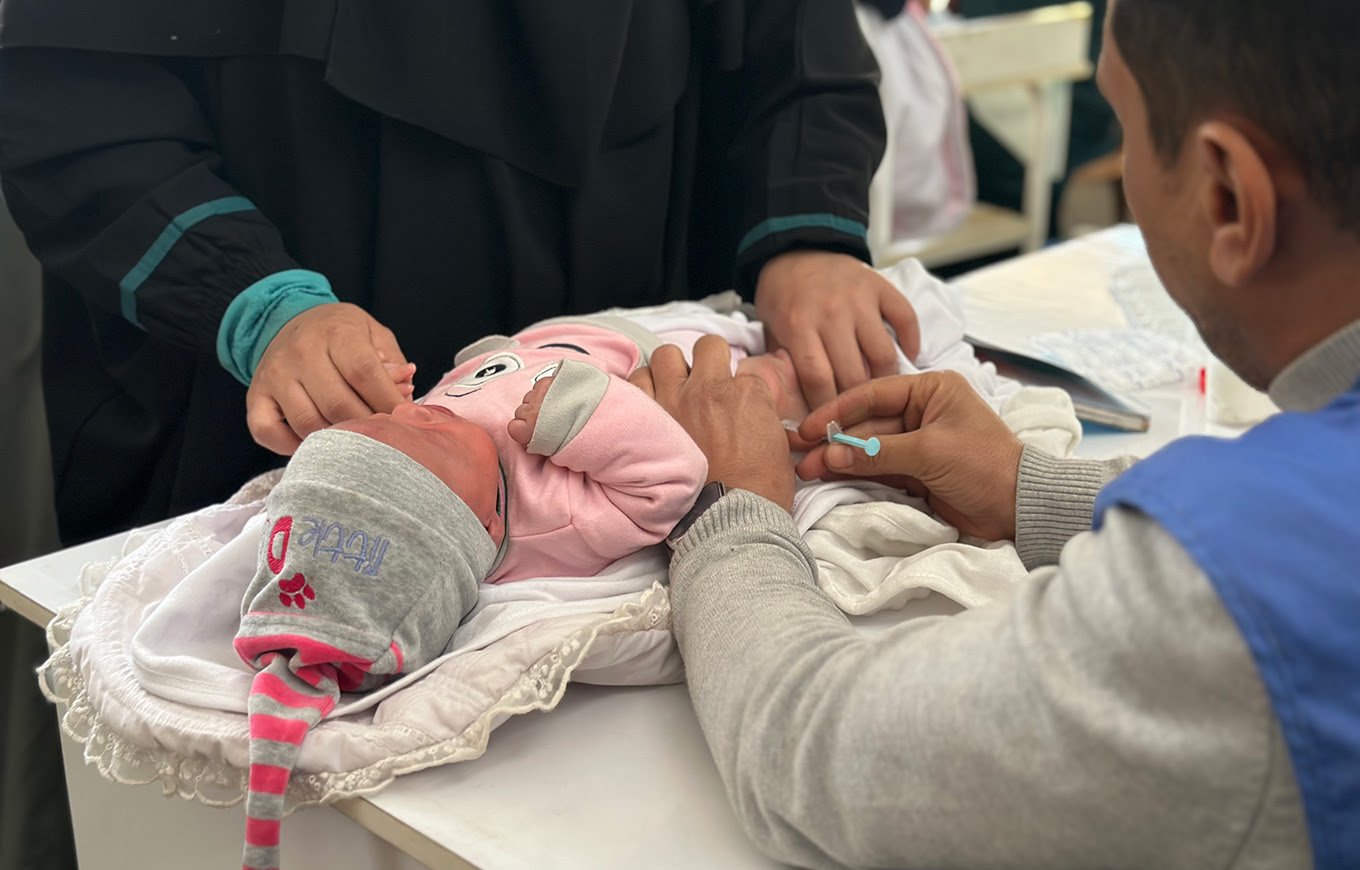
UNRWA health teams, participating in the second joint catch-up immunization campaign in the Gaza Strip. Jan. 2026 UNRAW photo