This piece is part of A Day for Gaza, an initiative in which The Nation has turned over its website exclusively to voices from the Gaza Strip. You can find all of the work in the series here.
an excerpt:
“They want a land without people”
On the sidewalk sat Mohammad Mansour, 74, wrapped in a wool scarf despite the heat.
“Since the Balfour Declaration in 1917,” he began, “we’ve been living this occupation. They want a land without people. This genocide is their way of finishing the project.”
He listed what was destroyed: homes, schools, mosques. “They even turned it into a war on faith,” he said.
Before the war, $30 could fill his pantry. During the genocide, one kilo of onions cost $100. “Now prices go up and down like bombs,” he said.
He spoke of two people he’ll never forget: young Aref Abu Laban, who was killed while helping his mother pick lemons, and his old friend Mohammad al-Saidi, who had dreamed up the Colorful Block project that once made these walls bright. “He believed color could defeat despair,” Mansour said. “Now the walls are gray again, but the dream is still alive in my heart.”
“We live as if the war never stopped.”
I met Dunya Ashour, 19, when she was taking some photos of the destruction of the New Ajjami Mosque.
“I don’t feel the ceasefire,” she told me. “At night I still wake up to explosions two kilometers away, in the yellow zones. I can smell the gunpowder in the air.”
She lost her favorite teacher, Arij al-Maydana, as well as her grandfather, Jameel. “I carry their loss every day,” she said, “but I tell myself they’re in a better place.”
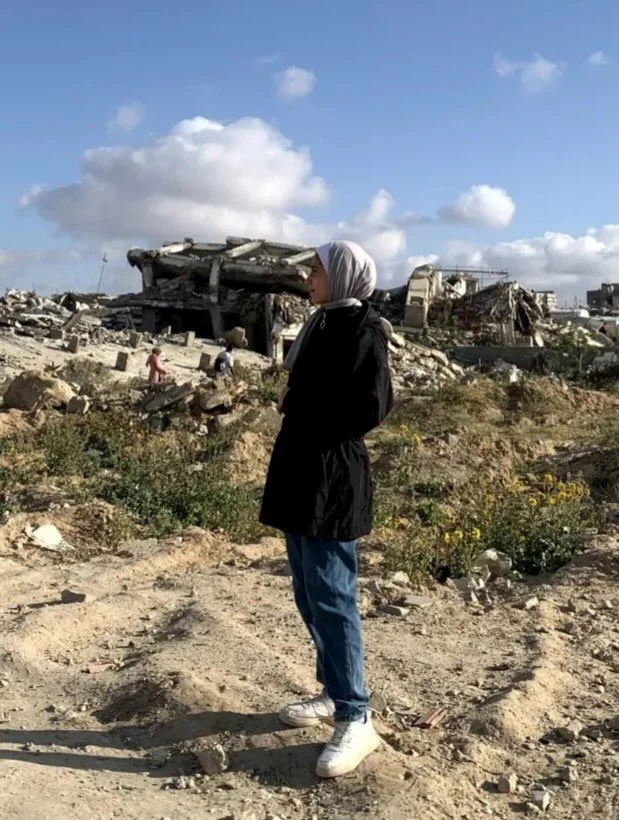
Dunya Ashour, 19.(Courtesy of Dunya Ashour)