Hostilities in the Gaza Strip and Israel | Flash Update #91 Inbox

Since 1 January, Israeli authorities have restricted all six humanitarian missions to resupply fuel to water and wastewater stations in the north, for life-saving water, sanitation and hygiene (WASH) assistance. This denotes a shift from the period between October and December 2023, where only 33 per cent of the missions (2) were restricted . Humanitarian partners have not been able to assess or resupply fuel to Jabalya area since receiving initial reports of water and waste flooding in Jabalya camp on 5 January. At least 100,000 internally displaced persons (IDPs) are estimated to reside in UN and public shelters in that area. The last humanitarian mission reaching there was on the 29 November, during the ceasefire. 

read the entire report: Hostilities in the Gaza Strip and Israel | Flash Update #91

Makeshift shelters erected by displaced people in Al Foukhari area of southern Gaza. Tents and improvised structures have been set up wherever possible, including on sidewalks, in squares and even in the middle of streets. Photo by UNRWA/Mohammed Hinnawi, 10 January 2024

Hostilities in the Gaza Strip and Israel | Flash Update #90

Between 1 and 11 January, only 21 per cent (5 of 24) of planned aid deliveries of food, medicines, water, and other lifesaving supplies to the north of Wadi Gaza proceeded. Humanitarian partners were forced to cancel or delay missions in two instances due to excessive delays at Israeli checkpoints or because the agreed routes were unpassable. Of the five missions that were able to proceed, humanitarian partners were only able to deliver all of the planned aid in two of these missions. The ability of humanitarian partners to respond to the extensive needs in the northern part of Gaza is being curtailed by recurring denials of access for aid deliverers and lack of coordinated safe access by the Israeli authorities. These denials and severe access constraints paralyze the ability of humanitarian partners to respond meaningfully, consistently and at-scale. 

Of note, multiple planned missions (between 7 and 10 January) to deliver urgent medical supplies to the Central Drug Store in Gaza city, as well as planned missions to deliver fuel to water and sanitation facilities in Gaza city and the north, were denied by the Israeli authorities. This marked the fifth denial of a mission to the Central Drug Store in Gaza city since 26 December. As a result, hospitals in northern Gaza remain without sufficient access to life-saving medical supplies and equipment.  

On 11 January, Israeli forces shot and killed a Palestinian man after surrounding his house in the Jaba' village in Jenin and ordering him to surrender.  There were unconfirmed reports of an exchange of fire between the Palestinian man and Israeli forces. Confrontations took place in the aftermath of the killing and some Palestinian injuries were reported. 

This raises to 332 the number of Palestinians killed, including 84 children, in the West Bank, including East Jerusalem, since 7 October 2023 and as of 11 January 2024. Additionally, two Palestinians from the West Bank were killed while carrying out an attack in Israel on 30 November. Of those killed in the West Bank (332); 323 were killed by Israeli forces, eight by Israeli settlers and one by either Israeli forces or settlers. So far this year, 23 Palestinians, including three children, have been killed. The number of Palestinians killed in the West Bank, including East Jerusalem, in 2023 (507) marks the highest number of Palestinians killed in the West Bank since OCHA started recording casualties in 2005. 
Read the full report: Hostilities in the Gaza Strip and Israel | Flash Update #90

A Civil Defence team member works to safely dismantle a wall at risk of collapse in a high-rise building struck during hostilities in Rafah, Gaza's most densely populated area, where a large number of displaced people are seeking relative safety. Photo by the Civil Defence, 10 January 2024. 

Hostilities in the Gaza Strip and Israel | Flash Update #89

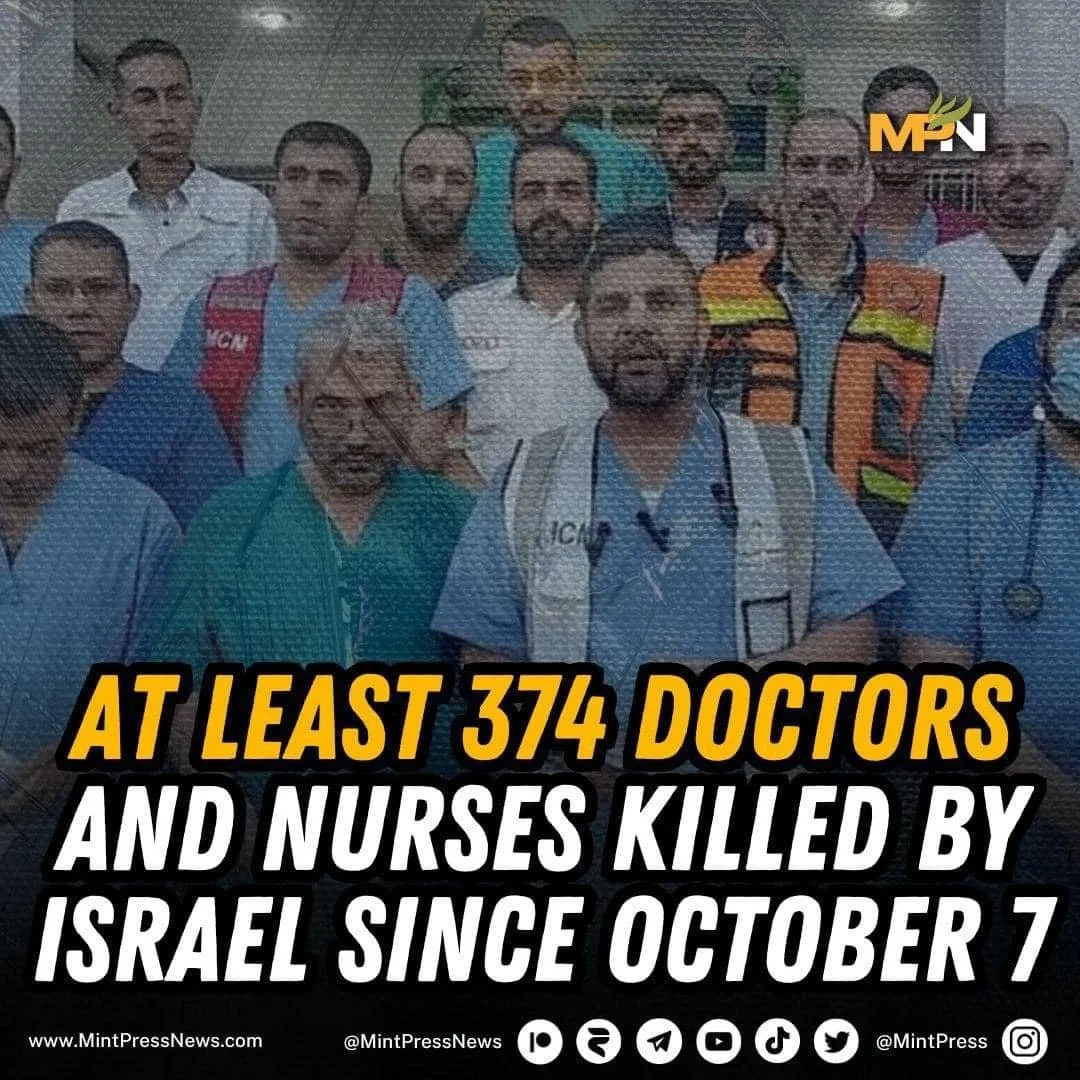
On 10 January, four members of the Palestine Red Crescent Society’s (PRCS) ambulance crew and two injured people were killed when an ambulance was struck on Salah al Din Street at the entrance of Deir al Balah, according to (PRCS). The UN Human Rights Office expressed concern that Israel forces, “have placed civilian lives at serious risk by ordering residents from various parts of Middle Gaza to relocate to Deir Al Balah – while continuing to conduct airstrikes on the city... Today, 10 January, IDF strikes reportedly hit a residential building in front of the [Al Aqsa] hospital, as well as an ambulance vehicle belonging to the Palestinian Red Crescent Society (PRCS). The strikes reportedly killed 13 Palestinians.” Reportedly, the severity of the strikes have led many medical staff to evacuate the hospital, despite the high need for medical care as a result of the continuing strikes.  

On 9 January, the Ministry of Culture published a report summarizing the losses sustained in the Palestinian cultural scene. As of 9 January, 41 intellectuals and artists, including four children who were already considered as artists or creators, have been killed. The report stated that 24 cultural centers were damaged or destroyed, and approximately 195 historical buildings were damaged, including 20 mosques and churches across the Strip.  

Since 11 October 2023, the Gaza Strip has been under an electricity blackout, after the Israeli authorities cut off the electricity supply and fuel reserves for Gaza’s sole power plant were depleted. The communications and fuel shutdown continues to significantly hinder the aid community’s efforts to assess the full extent of needs in Gaza and to adequately respond to the deepening humanitarian crisis. For more information on electricity supply to the Gaza Strip, please see this dashboard

read the entire report: Hostilities in the Gaza Strip and Israel | Flash Update #89


The UN and its humanitarian partners are delivering food, water, blankets, health supplies and more, but they require greater access throughout Gaza to help people in need wherever they are and at a meaningful scale. Photo by UNRWA