Humanitarian Situation Report | 7 May 2026
Highlights
Rapid response supported by the humanitarian community prevented loss of life near a solid waste dumpsite that caught fire in Gaza city.
Rodents and insects continue to drive increases in skin infections and other health risks across Gaza.
In the West Bank, the spread of foot-and-mouth disease is heightening humanitarian concerns for vulnerable Bedouin and herding communities.
In just a week, 55 Palestinians were displaced in Area C and East Jerusalem due to administrative demolitions and recurrent settler attacks and intimidation.
Amid ongoing movement restrictions and delays, the World Health Organization has documented 38 attacks on health care across the West Bank since January – affecting four health facilities and 33 ambulances.
Overview
Across the Occupied Palestinian Territory, people’s ability to stay safe, maintain livelihoods and access basic services is being steadily worn down. Violence, displacement, restrictions on access and movement and damage to essential infrastructure are deepening humanitarian needs. Relief partners continue to respond, but insecurity, access constraints, restrictions on key partners, and shortages of critical supplies are limiting the scale, timeliness and durability of assistance, leaving already vulnerable communities unprotected and with fewer ways to cope.
Read the full report online
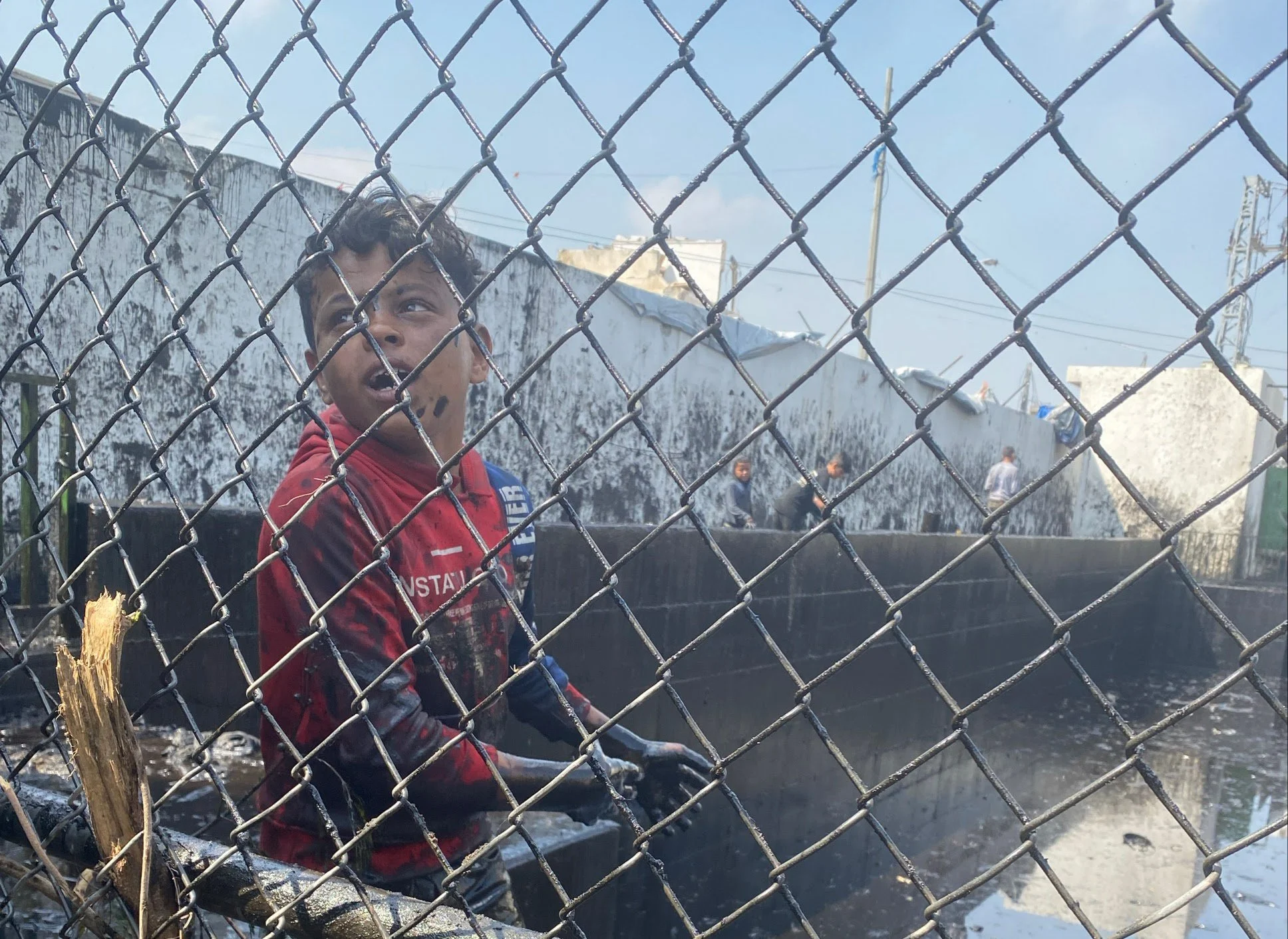
A boy in Gaza scoops up liquid from a stagnant pool of water, hoping to recover oil he can sell to help support his family. Photo by OCHA

Gaza Faces Public Health Collapse Amid Rat Infestation & Disease as Israel Blocks Reconstruction
Gaza is facing an “environmental and biological apocalypse” under Israeli bombardment and blockade, reports Palestinian aid worker Eyad Amawi of the Gaza Relief Committee. Israel’s destruction of infrastructure has become a “generator for disease,” with sewage contamination and rodent infestation now an everyday hazard for refugees living in tent camps. “[It’s] no longer just bombardment or physical destruction. It is the collapse of every essential condition required for human survival: water, food, health, dignity, shelter, safety, everything.”
Watch the Democracy Now! report here.
A Telling Graph
Neve Gordon
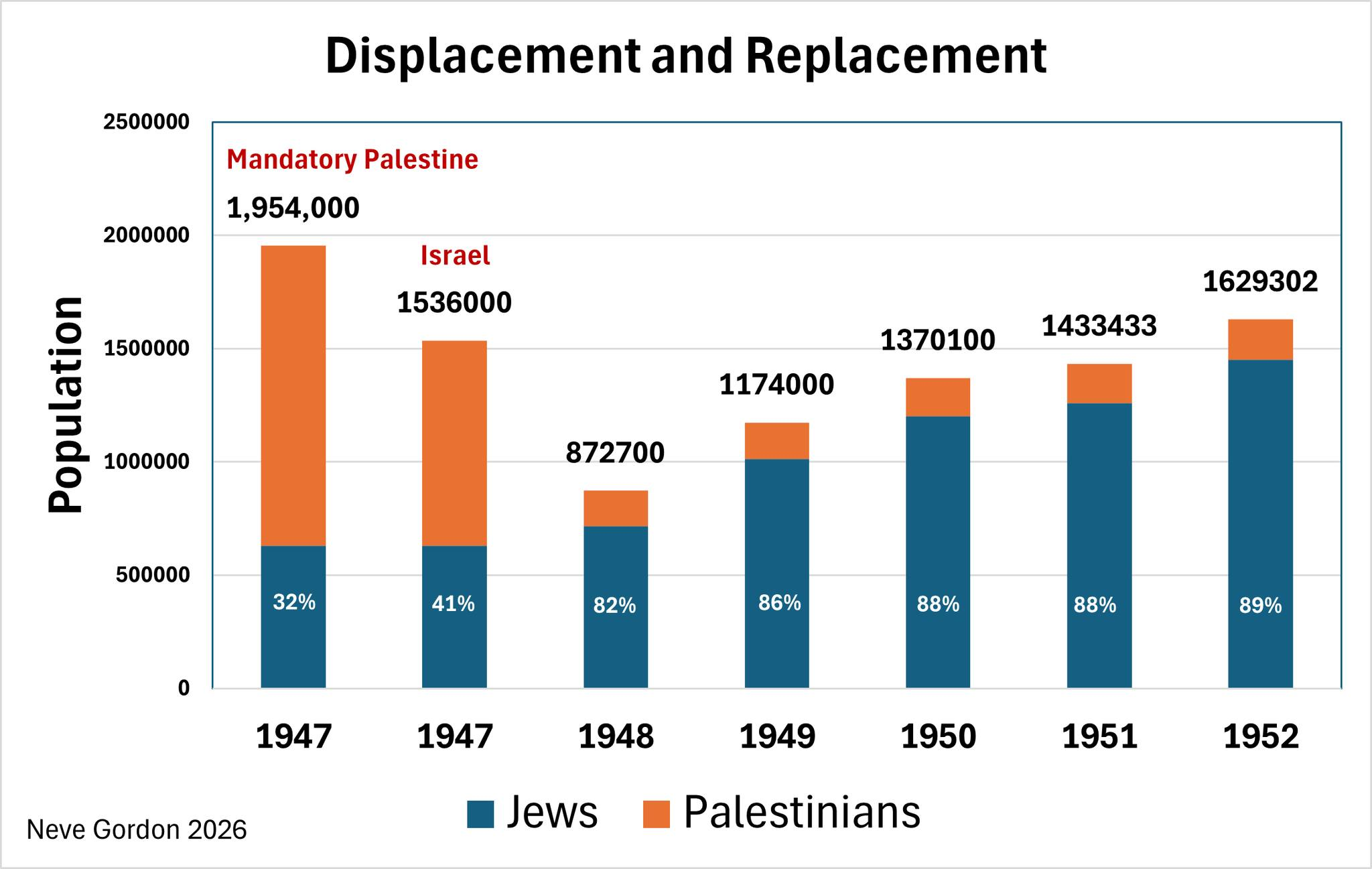
In preparation for my talk at the University of Waterloo Canada I re-examined the data about the population in mandatory Palestine and Israel from 1947 to 1952. What we see in the graph below is the changes in the make up of the population over a period of six years. The size of population in 1947 mandatory Palestine was about 1.95 million. At the time, Jews comprised 32% of the population. The size of the population in 1947 in what would become Israel (namely, without the West Bank and Gaza Strip) was slightly above 1.5 million and in 1947 the Jews comprised 41% in that area. Within four and a half years the 750,000 Palestinians who were expelled or fled and became refugees in 1948 were replaced by a similar number of Jews, and the total population in Israel had reached the size it had been before the war. Obviously, the proportions had shifted dramatically from 59% Palestinians in 1947 to 12% in 1951. This is a graph that depicts the settler colonial logic of displacement and replacement, whereby the settler first displaces and then replaces the native.