As Israel continues to restrict aid, Gaza’s shattered health system is struggling to treat and contain illnesses spreading through overcrowded tent camps.
By Ahmed Dremly and Ibtisam Mahdi May 29, 2026
Eman Abu Jame had counted her family among the lucky ones. Israel bombed their home in the southern Gaza Strip at the beginning of the war, forcing them to move from one shelter to another. But throughout the first two years of the genocide, neither she, her husband, nor her children suffered any serious health problems.
That all changed in October 2025, when they took refuge in a crowded tent camp in Khan Younis.
By the time they arrived, the lack of hygiene, spread of insects, and severe overcrowding had turned the camp into a breeding ground for disease. Two months later, Abu Jame’s 8-year-old son, Mousa, and her 47-year-old husband, Abdul Majeed, began showing symptoms: Their bodies started to swell, accompanied by severe diarrhea and high fevers.
Due to the difficult economic conditions and skyrocketing prices of meat, fish, and other protein-rich foods, their protein levels dropped rapidly, worsening their ability to retain fluids.
“We were completely unable to buy food and water,” Abu Jame told +972 Magazine. Everything was so expensive back then, and we simply did not have the money. My husband couldn’t afford anything — even bread was unavailable.”
Doctors struggled to diagnose both father and son. At first, they suspected a gluten allergy, but tests ruled it out. Travelling abroad for treatment was also impossible due to the closure of crossings. The only effective treatment was medical albumin, a protein solution that helped stabilize their condition.
“When [Mousa] took the medication, he would get better,” Abu Jame explained. “But whenever he missed it, his body would start swelling up all over again.”
Yet the treatment was extremely difficult to acquire. Since October 7, 2023, Israel has heavily restricted the entry of medicines and blocked international NGOs from delivering medical supplies to the Strip. Even after the announcement of a ceasefire last October, Israel continued to block aid; as of this month, according to Gaza’s Ministry of Health, 47 percent of essential medicines, 59 percent of medical supplies, and 87 percent of laboratory testing materials are out of stock.
As the medication ran out, Mousa’s body swelled further with fluid, and he died in January. Three months later, Abdul Majeed also succumbed to the same mysterious illness that doctors had failed to diagnose.
While the disease remained unidentified, it was clearly linked to conditions in the camp — potentially transmitted by a rodent bite or an ectoparasitic infestation. In just the first four months of 2026, according to the UN, there have been over 70,000 cases of similar infestations across Gaza, where parasites live on or under the skin and become a vector for disease. More than 80 percent of displacement sites report visible pests alongside rampant skin infections like scabies, lice, and bedbugs, while Save the Children recently noted that two in three children in Gaza live in displacement sites plagued by these risks.
READ THE ENTIRE ARTICLE HERE.
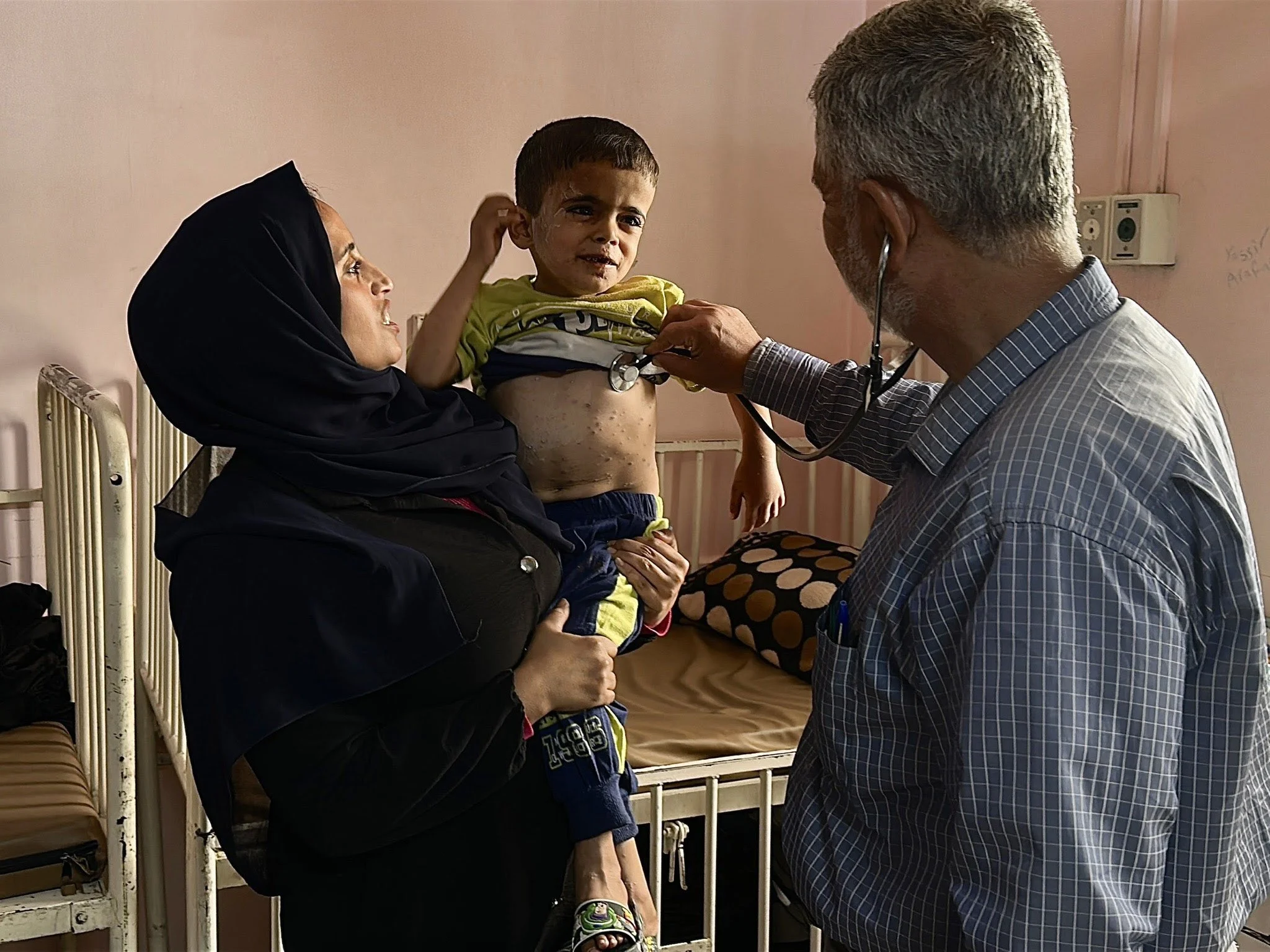
Palestinian child suffering from skin infections and severe malnutrition receives treatment at Al-Nasser Hospital, Khan Younis, southern Gaza Strip, May 12, 2026. (Doaa Albaz/Activestills)