Update on the genocide & one thing you can do
More than...
Since the October 2023 start of Israel’s genocide in Gaza—
Israel has killed more than 75,000 people, including more than 21,289 children
Israel has murdered roughly 3.4% of Gaza’s pre-October 2023 population of 2.2 million people
Israel’s assaults severely injured more than 173,000 people, including more than 44,500 children
More than 10,000 people are unaccounted for, presumed dead under rubble
Israel has entirely annihilated more than 2700 families
And more than 6000 additional families have only one surviving member
Israel has orphaned more than 17,000 children (killing both parents)
And Israel has killed one parent of more than 59,000 children
Israel has caused more than 6000 people to become amputees, 1/4 of them children
Gaza has the highest number of child amputees per capita anywhere in modern history
STOP ARMING ISRAEL
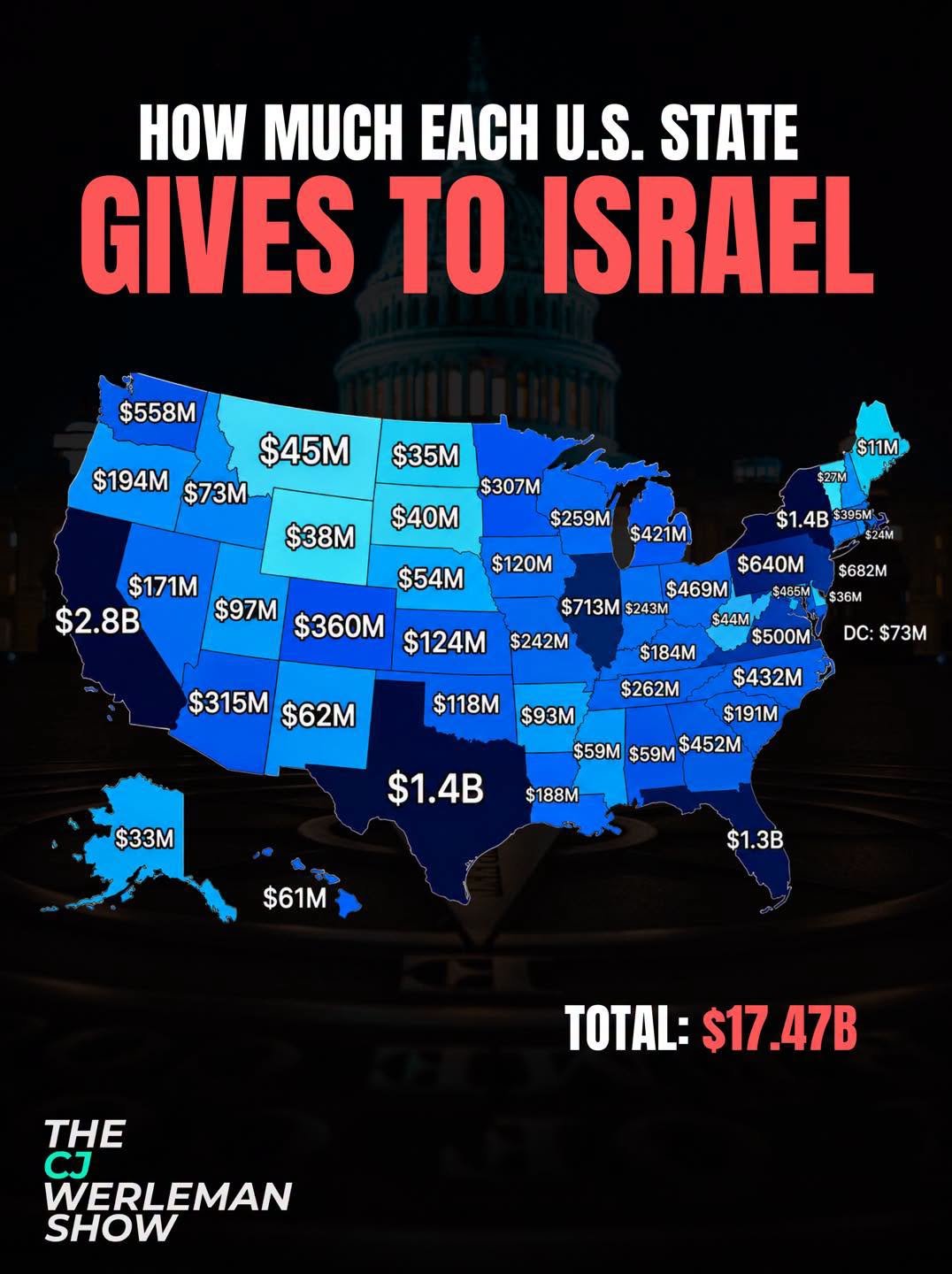
Since October 2023, the federal U.S. government sent Israel more than $30 billion in military funding to mass murder the Palestinian people
Massachusetts taxpayers alone pay more than $612,252,129 to fund Israel’s genocide
Take Action—Tell Congress to Support the Block the Bombs Act
How Much Each U.S. State Gives to Israel
CJ Werleman
But 44 million Americans don’t have access to clean drinking water.
Humanitarian Situation Report | 3 July 2026
Highlights
In just two weeks, over 9,000 cases of chickenpox were reported across 130 health facilities in Gaza, half of them in Khan Younis.
Although only 85 per cent of the solid waste generated in Gaza is collected, combined with pest control, the overall health and environmental risks from unmanaged waste and pest infestation have not increased.
A shortage of sodium bicarbonate, due to chronic underfunding, at the Al Shifa Hospital is said to be severely affecting haemodialysis services, reducing treatment capacity for about 240 patients with end-stage kidney disease.
A new humanitarian assessment in two Palestinian communities in the West Bank found that the establishment of nearby settlement outposts has been accompanied by repeated settler attacks, mounting insecurity and deteriorating access to essential services.
More than 2,300 Palestinians have been displaced across the West Bank in 2026 due to settler attacks and related access restrictions.
Demolitions in East Jerusalem neighbourhoods on the ‘West Bank’ side of the Barrier now account for 37 per cent of all lack-of-permit demolitions in East Jerusalem, nearly double the average recorded over the previous six years.
Overview
Across the Occupied Palestinian Territory (OPT), Palestinians are being confined to ever-smaller spaces where they can live, move, access essential services, and sustain their livelihoods. In the Gaza Strip, new displacement is being driven by the expansion of military-imposed access-restricted areas – occasionally marked by yellow cement blocks – or by airstrikes or shelling that, over the past week alone, ignited fires that consumed hundreds of tents. In the West Bank, displacement is increasingly linked to recurrent Israeli settler attacks and the establishment of new settlement outposts, alongside home demolitions, which undermine access to land, livelihoods, and basic services. Across both contexts, repeated displacement is eroding household resilience, deepening humanitarian needs, and increasing dependence on humanitarian assistance.
Recent publications
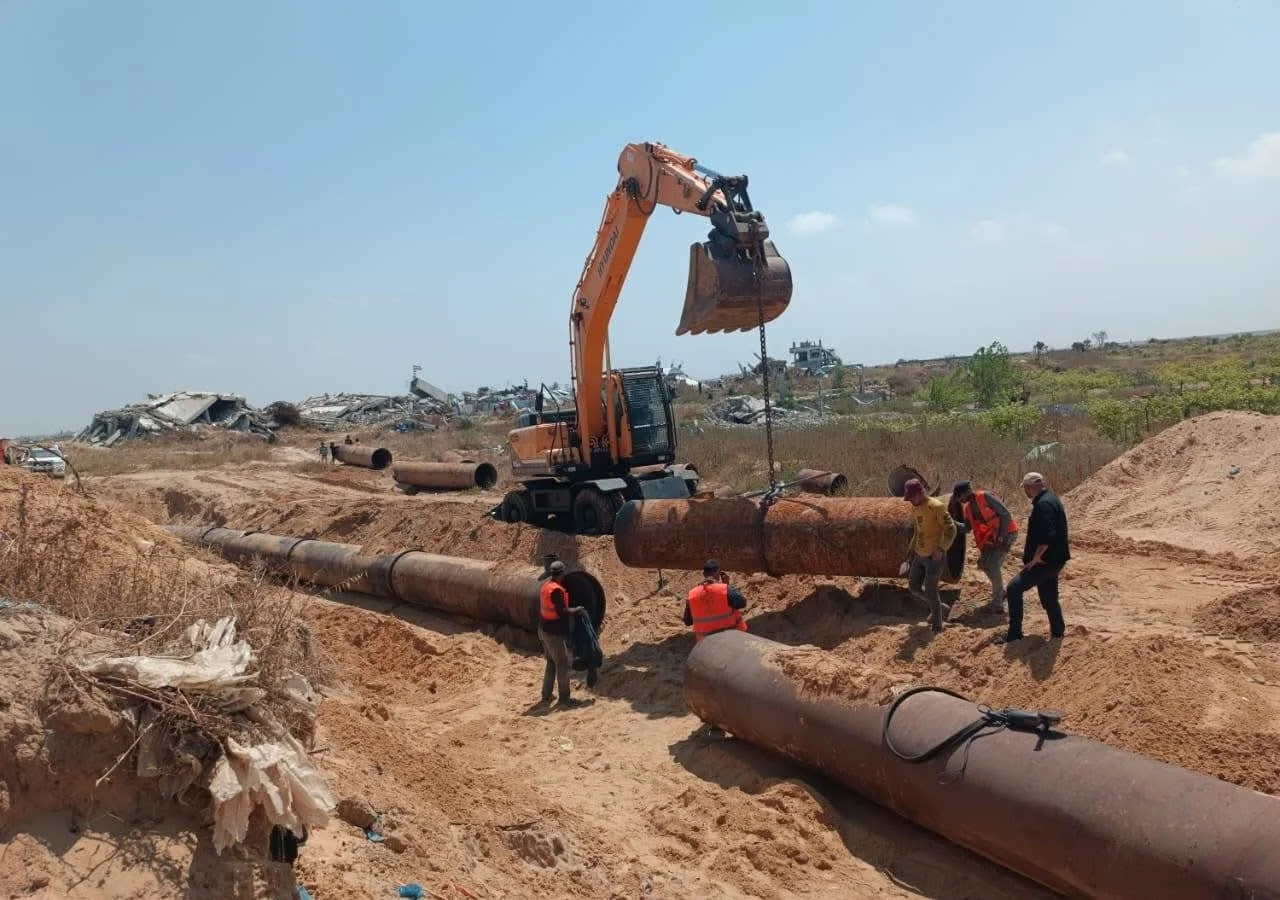
The temporary restoration of wastewater infrastructure serving Gaza city through support by UNICEF and the ICRC. Photo by UNICEF
