Marwan Barghouti was shot in the leg at point-blank range by an Israeli prison guard and denied medical treatment, his family said.
Key Developments
An Israeli prison guard fired a rubber bullet at Marwan Barghouti’s leg from point-blank range, causing injury and bleeding.
His son said Barghouti was not taken to a hospital and received no medication despite his deteriorating health.
Fatah warned that repeated assaults, isolation and medical neglect amount to a policy of “slow execution” against the imprisoned leader.
An Israeli prison guard shot senior Palestinian leader Marwan Barghouti in the leg with a rubber bullet at point-blank range, leaving him wounded and bleeding inside prison without medical treatment, according to his family.
Arab Barghouti, the imprisoned Fatah leader’s son, said Monday that his father’s health had deteriorated following a series of attacks inside Israeli prisons.
“My father is bleeding inside the prison and is prohibited from receiving treatment,” he told Al-Ghad television, adding that Israeli forces had assaulted him repeatedly.
According to the family, Barghouti was neither transferred to a hospital nor provided with medication after the latest attack.
His wife, attorney Fadwa Barghouti, said the family learned of the shooting following his most recent prison visit.
She said a guard fired the rubber bullet directly at his leg from zero distance, causing a wound and bleeding.
The assault came as the Israel Prison Service issued what the family described as an incitement report against Barghouti and as the international campaign demanding his release continued to expand.
Deteriorating Health
Arab Barghouti said his father had lost approximately ten kilograms due to worsening prison conditions and severe restrictions on the food provided to Palestinian detainees.
Despite his declining health, he said Barghouti remained in high spirits and continued to display a strong will.
His son added that the imprisoned leader remained aware of the scale of the sacrifices being made by Palestinians under Israeli occupation and continued to stand by his political positions.
Barghouti has been held in isolation at Ganot Prison alongside several other leaders of the Palestinian prisoners’ movement since November 2023, after being repeatedly transferred between isolation sections.
The Palestinian Prisoners’ Media Office said he had been subjected to approximately seven severe assaults since the beginning of Israel’s genocide in Gaza in October 2023.
Those attacks caused fractured ribs and multiple other injuries, according to Palestinian prisoners’ institutions.
The office said a previous assault took place in September 2025, after Israeli National Security Minister Itamar Ben-Gvir entered Barghouti’s cell and directly threatened him.
The Arab League has also said that a stun grenade was thrown into his cell approximately two months ago, causing burns to his hand.
‘Slow Execution’
For its part, the Fatah movement warned that the escalating attacks posed a genuine threat to Barghouti’s life.
The movement spokesperson Abdul Fattah Dawla said the treatment of Barghouti had “exceeded all limits” and exposed a systematic policy of revenge and “slow execution” against one of the most prominent Palestinian national leaders.
He said the latest shooting followed repeated physical attacks, prolonged solitary confinement and the denial of medical care.
Fatah held the Israeli government fully responsible for Barghouti’s life and said the ongoing public incitement led by Ben-Gvir made the government accountable for any further harm.
The movement called for urgent international intervention to prevent what it described as another crime inside Israeli prisons.
It also urged the International Committee of the Red Cross, the United Nations and the UN Human Rights Council to send independent investigative committees, provide international protection for Palestinian prisoners and end policies of torture, isolation and assault.
The popular campaign for Barghouti’s freedom similarly warned that Israeli authorities were attempting to assassinate him through repeated violence, isolation, medical neglect and harsh detention conditions.
International Calls for Action
The Arab League has demanded the formation of a special international committee to investigate the repeated assaults against Barghouti.
It also called for an independent medical visit, his transfer to a hospital outside the prison system, an end to systematic torture and his immediate release as a political prisoner.
Fadwa Barghouti said Israeli prison authorities had become increasingly angered by the official, popular and international response to the “Freedom for Marwan, Freedom for Palestine” campaign.
“What the occupation has failed to understand for a quarter of a century, and still does not understand today, is that Marwan has never retreated from his conviction that freedom is a right, that the occupation will end, and that resisting occupation and working for a just peace that ends it is a national and moral responsibility,” she said.
She added that incitement and physical attacks would not remove him from the consciousness of the Palestinian people or the conscience of supporters of freedom worldwide.
Nearly a Quarter-Century in Prison
Barghouti, born in 1959, is a member of Fatah’s Central Committee and a former member of the Palestinian Legislative Council.
Israeli occupation forces arrested him in Ramallah on April 15, 2002.
An Israeli court later sentenced him to five life terms and an additional 40 years over his role during the Second Intifada.
Barghouti has rejected the authority of Israeli courts over Palestinians living under occupation.
He remains one of the most prominent and popular Palestinian political figures and has repeatedly been proposed for inclusion in prisoner exchange agreements.
Israel refused to release him under the Al-Aqsa Flood prisoner exchange agreement despite continuing Palestinian and international demands.
Fatah said targeting Barghouti was an attack on the broader Palestinian national will and would only deepen popular commitment to the struggle for prisoners’ freedom.
The movement warned that Palestinian prisons had become sites of torture, deprivation and killing, and called for a wider political, legal and media campaign in defense of Barghouti and all Palestinian detainees.
(Al-Arabi, Al-Ghad, AJA, PC)
RELATED ARTICLES
Barghouti, Saadat Set for Release in Second Phase of Deal – Reports
Palestinian Election Officials Approve 36 Lists to Run in May Vote
Hamas Political Leader Receives Marwan Barghouti’s Wife
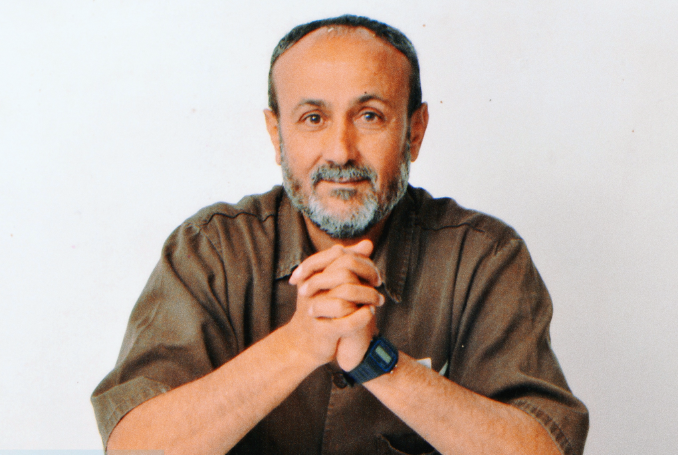
Caption for photo: Imprisoned Palestinian leader Marwan Barghouti. (Photo: Free Marawan Now, X)