Israel wipes genocide evidence in Gaza, carting off rubble and remains in 100 trucks daily

Source: Euro-Med Human Rights Monitor

Palestinian Territory – The Israeli forces, along with Israeli civilian contractors, are conducting a wide and organised operation to process and clear the rubble from neighbourhoods and facilities they have destroyed in the Gaza Strip and relocate it from areas under their military control to outside the Strip.

This is occurring without any official record of the quantities removed or independent oversight, and before international and local investigative committees have had the chance to survey, examine, and document the sites. This risks destroying crucial evidence of genocide and the remains of victims still unaccounted for under the rubble.

These operations are not part of organised humanitarian efforts to rescue the missing, open roads, or prepare for reconstruction. Instead, Israel is acting unilaterally within closed areas under its military control by demolishing remaining buildings and then crushing, mixing, and transporting the rubble before forensic teams, evidence experts, and unexploded ordnance specialists can examine, document, and preserve the sites, along with the evidence and human remains.

    At least 10 million tonnes of rubble have been removed, crushed, or moved from their original sites within the areas under Israel’s unlawful military control, which encompass about 66% of the Gaza Strip   

The Gaza Rapid Damage and Needs Assessment, published jointly by the World Bank, the United Nations, and the European Union in April 2026, estimated that approximately 68 million tonnes of rubble are spread across the Gaza Strip, based on damage reports up to October 2025. This figure does not necessarily account for damage caused by later demolition and destruction operations.

According to its initial field data, Euro-Med Human Rights Monitor estimates that at least 10 million tonnes of rubble have been removed, crushed, or moved from their original sites within the areas under Israel’s unlawful military control, which encompass about 66 per cent of the Gaza Strip.

Approximately 400 heavy pieces of excavation, demolition, crushing, and transport machinery, operated by Israeli civilian companies under military protection, are active across eastern and southern Gaza. They demolish remaining structures, crush rubble from destroyed neighbourhoods, and load the debris onto trucks for transportation away from the original sites.

In recent weeks, Euro-Med Monitor tracked nearly 100 Israeli trucks daily leaving the Gaza Strip with debris. These trucks carry rubble to undisclosed sites within Israel and further south of the occupied West Bank. The Israeli authorities have not provided details on the quantities removed, the routes taken, the destination sites, or how the material is utilised. They also have not permitted independent oversight of the sorting, weighing, or transport processes. This lack of transparency makes it very difficult to trace the transported material, identify evidence, or recover any human remains that might be present.

The systematic removal of rubble at this pace conceals the evidence of appalling crimes Israel committed in Gaza, especially those related to genocide, such as summary executions and killing unarmed civilians. These sites need careful examination and thorough criminal investigation before any intervention that might change or erase their features.

The debris scattered throughout the Gaza Strip includes possible locations of unlawful killings and bombings that targeted entire families, as well as sites believed to contain mass graves or bodies buried within destroyed homes, hospitals, shelters, and civilian facilities.

These sites hold evidence critical for identifying the weapon, attack sequence, victim and attacker positions, firing ranges, cause and manner of death, as well as fragments, projectiles, spent cartridges, biological traces, and personal belongings.

Crushing, mixing, and transporting rubble can erase evidence, location details, and connections within the crime scene. This process also disrupts the chain of custody, potentially making it impossible to trace where evidence was collected or to link it to a particular incident or victim. This damage cannot be reversed by aerial photographs or subsequent testimony, as investigating international crimes also requires tangible evidence that can be examined, compared, and legally verified.

These operations pose a direct risk to the remains of thousands of missing persons, estimated by Gaza’s Civil Defence to be around 8,500 in July 2026. Using crushers and heavy machinery without prior forensic and humanitarian surveys could crush or scatter the remains, mix them with rubble, and separate them from belongings and documents vital for victim identification. This process may also lead to transporting the remains to unknown locations that may become impossible to access later.

This conduct infringes on the families’ right to know the fate of their missing relatives and to recover and bury their remains with dignity. It also contradicts international standards that call for searching for the deceased, collecting and safeguarding information about them, and ensuring proper identification and recording. Additionally, removing sites before investigation breaches the guidelines outlined in the Minnesota Protocol on the Investigation of Potentially Unlawful Death. This protocol emphasises securing and documenting the scene, gathering evidence while preserving its chain of custody, and recovering and examining remains with scientific methods that uphold the victims’ dignity and their family’s rights.

The debris in the Gaza Strip comprises more than just rubble; it includes private and public property, essential building materials like steel, stone, and concrete that can be recycled and reused, as well as other valuable assets necessary for Palestinians to reconstruct their homes, roads, and infrastructure. It may also contain property documents, official records, and personal belongings that are part of individuals’ and families’ rights and memories.

Removing rubble from the Gaza Strip and commercially exploiting it without the owners’ consent or compensation may, depending on the circumstances and intent of the seizure, constitute unlawful confiscation or pillage. Such acts are prohibited under international humanitarian law, especially Article 33 of the Fourth Geneva Convention and the relevant provisions of the Rome Statute.

These actions are part of a broader pattern that has involved bulldozing sites believed to contain mass graves, storming and damaging hospitals and medical facilities after they were suspected of being sites of grave crimes, ongoing demolition of buildings in military-controlled zones, and targeting Palestinian journalists. Additionally, international investigators and independent media have been prevented from accessing the most heavily destroyed areas.

This deliberate removal of evidence occurs when the International Criminal Court (ICC) is still investigating crimes in Palestine, alongside other cases under universal jurisdiction in national courts. Destroying crime scenes before investigations are finished hampers legal accountability and complicates efforts by international investigators and prosecutors to establish facts, as vital evidence may be lost once removed from the Gaza Strip.

Moreover, Article 70(1)(c) of the Rome Statute considers “destroying, tampering with or interfering with the collection of evidence” as criminal acts that hinder the ICC’s justice mission when done deliberately. The ICC Prosecutor should investigate these actions as deliberate interference with evidence collection related to the ongoing investigation into the Situation in the State of Palestine, which also includes unlawful destruction, seizure, or pillage of property.

The large-scale crushing and removal of rubble not only destroys evidence but also erases land boundaries, house foundations, street networks, and neighbourhood features. This process strips Palestinians of the physical markers of ownership and their connection to the land, making it more difficult for them to return and rebuild their communities as they once were.

Transforming forcibly depopulated Palestinian towns and neighbourhoods into levelled, open spaces under Israeli control is a concrete act that deepens the displacement and ethnic cleansing. This process is inseparable from Israeli settler colonialism, which involves uprooting Palestinians, erasing signs of their presence, and redefining the land without them. This sets the stage for Israel’s efforts to re-establish settlements in Gaza and displace Palestinian residents, advancing a new phase of colonisation and the ongoing denial of land and the right of return.

The international community, including the Security Council, the UN General Assembly, and states parties to the Rome Statute, must urgently intervene to halt the systematic removal and transport of rubble from the Gaza Strip. They should also advocate for independent international forensic and criminal investigation teams to be granted access to assess and document the destruction sites before any further removal or transport occurs, ensuring that physical evidence is preserved to hold those responsible for genocide accountable.

Euro-Med Monitor urges the international community to push Israel to immediately and fully stop all rubble removal and transport activities. This includes requiring detailed disclosures of transported materials, weighing logs, truck routes, ultimate destinations, company and contractor names, beneficiary parties, payment information, machinery and truck registration numbers, and tracking data, as well as transparency regarding any sale, recycling, or commercial use of materials extracted from Gaza.

Furthermore, removing rubble or recyclable materials from the Gaza Strip should be prohibited until a transparent Palestinian and international system for managing these materials is put in place. This system should ensure that any unlawfully transported materials are either returned or their full value is compensated to the owners. Additionally, rubble suitable for reuse should be allocated to local reconstruction projects that benefit the Palestinian population and protect individual and public property rights.

States where the implicated companies or machinery manufacturers are based should mandate a halt to any actions that could lead to property demolition, evidence removal, or rubble seizure. They must also preserve all relevant contracts, correspondence, and operational data, and carry out independent investigations into the accountability of their directors and staff. Euro-Med Monitor urges targeted measures against individuals and companies found to have known about and taken part in these illegal activities, such as exclusion from public contracts, freezing assets, and criminal prosecution.

Any efforts to remove rubble or rebuild in the Gaza Strip must be led by Palestinians, involving local residents, property owners, and families of the missing. These initiatives should ensure the protection of evidence, recovery of remains, clearance of unexploded ordnance, sorting of hazardous materials, local reuse of rubble, preservation of property maps and urban fabric, and prevent reconstruction from being used to cement control or alter the enclave’s geographic or demographic makeup.

Euro-Med Monitor affirms that a ceasefire or political agreements do not erase crimes or their evidence. Reconstruction and rubble removal should happen alongside preserving evidence, discovering the fate of the missing, recovering property, holding perpetrators accountable, and ensuring victims’ rights to truth, justice, and reparation.
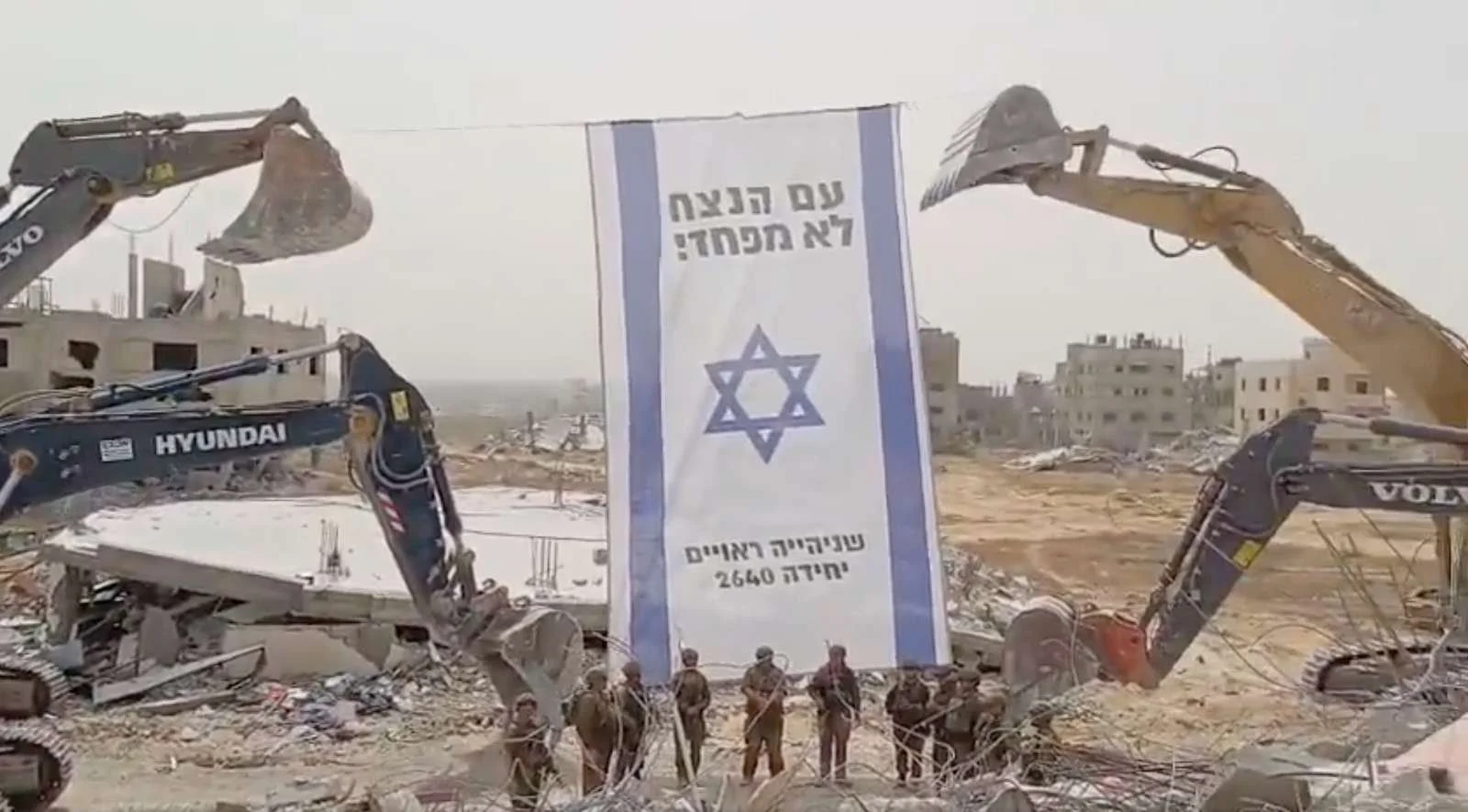
Members of the Israeli Military Unit 2640 - Uriah (An irregular unit operating under the Gaza Division's command and whose tasks are focused on demolishing homes), Gaza Strip. July 21, 2025 (Ha-Macom newspaper)
Adalah: During Hearing on Israel’s Anti-UNRWA Laws, Supreme Court Adopts State Narrative and Urges Petitioners to Withdraw Petition

August 3, 2026


Today, 3 August 2026, the Israeli Supreme Court concluded its hearing on a petition filed by Adalah on behalf of 10 Palestinian refugee families and the NGO Gisha, challenging the constitutionality of three laws aimed at dismantling the operations of the United Nations Relief and Works Agency for Palestine Refugees (UNRWA). 
 

Read more about the petition and case developments here: Shaher Alqam v. The Knesset et al. (Challenge to Israel’s anti-UNRWA Laws)
 

The hearing took place after a year and a half of repeated court delays, even as the ongoing implementation of these laws continues to inflict severe violations on fundamental rights of Palestinian refugees.
 

During the hearing, the court effectively  accepted the state’s rationale that it holds no legal responsibility toward the occupied West Bank and Gaza Strip, in complete contradiction of the laws of occupation and Israel’s obligations as an occupying power, while asserting that it must merely offer alternative solutions in illegally annexed East Jerusalem. Justices based their entire line of questioning on the premise that Israel can unilaterally replace UNRWA. The court accepted this claim at face value without examining the legality of these legislative measures  or considering the catastrophic consequences for hundreds of thousands of refugees reliant on UNRWA services.
 

Crucially, the court ignored the petition’s main argument, concerning the violation of fundamental human rights, under both domestic and international law. Deliberations focused almost exclusively on administrative powers, ignoring the status of Palestinian refugees and UNRWA’s mandate under international law. The court further recommended that the petitioners withdraw the petition, signaling its refusal to intervene against the ongoing effort to nullify  the rights of Palestinian refugees.
 

Dr. Suhad Bishara, Adalah’s Legal Director and lead counsel on the petition, stated:

“During today’s hearing, the Supreme Court demonstrated its total refusal to engage with the status of Palestinian refugees or their rights under international law. Instead of subjecting the state’s violations to judicial scrutiny, the court’s line of questioning focused entirely on state authority and the feasibility of replacing UNRWA, culminating in a push for us to withdraw the petition. This approach signals the court’s readiness to shield state actions aimed at dismantling UNRWA and stripping Palestinian refugees of protections under international law.”

Palestinian Americans changed the conversation. Now, can they finally build political power?

Palestinian Americans have transformed the U.S. debate over Palestine in ways unimaginable just a few years ago. Now, the question is whether they are prepared to build institutions that can turn these shifting attitudes into real political power.

BY SAMI MSHASHA  via Mondoweiss

JULY 27, 2026

When Salim Totah and Dr. Fuad Shatara appeared before the U.S. Congress in 1922 to oppose the Balfour Declaration, they were asking America to pay attention to a people most Americans knew little about and a cause few cared to understand. Their audience was small, their influence negligible and the political odds overwhelmingly stacked against them. Yet those early Palestinian immigrants understood something that would shape the next century: Palestine would have to be defended not only in Jerusalem and Jaffa, but also in Washington, New York, Detroit, Chicago and every American city where Palestinians built new lives.

More than one hundred years later these efforts has transformed the American debate. Palestine is no longer absent from public life. Millions of Americans have marched in solidarity with Palestinians. University campuses have become centers of political activism. Churches, labor unions and civil rights organizations openly challenge policies that only a few years ago were considered beyond criticism. Members of Congress now speak of occupation, apartheid and even genocide, while younger Americans have shifted public opinion in ways that would have been almost unimaginable a generation ago.

This did not begin after October 2023, nor did it happen by chance. It was built over decades by successive generations of Palestinian Americans. Scholars such as Edward Said and Ibrahim Abu-Lughod challenged the intellectual erasure of Palestine. The Association of Arab-American University Graduates and the General Union of Palestinian Students created spaces where Palestinian identity and political thought could flourish. James Abourezk demonstrated that Arab Americans could organize nationally and engage Congress as citizens. James Zogby and the Arab American Institute helped move electoral participation from the margins to the center of Arab American political life. Alongside them stood hundreds of local organizations and thousands of volunteers who kept the Palestinian cause alive through years when speaking publicly carried real professional and personal consequences.

Their achievements deserve recognition for it changed America’s conversation about Palestine but unfortunately it failed to build the national political institutions capable of turning that achievement into sustained political influence. That is not a criticism of one generation or one organization. It is the unfinished story of Palestinian America itself.

The easy explanation is that the community never had a fair chance. There is truth in that. Palestinian Americans organized on behalf of a stateless people while confronting a political establishment firmly aligned with Israel, a media landscape that rarely reflected Palestinian voices and, after September 11, a climate in which Arab and Muslim political activism came under unprecedented suspicion. Those realities shaped the community’s political development but they do not fully explain it.

Other American communities also faced hostility, prejudice and political exclusion, yet gradually built durable institutions that outlived individual leaders and moments of crisis. Palestinian Americans became remarkably effective advocates. They educated, protested, organized conferences, raised humanitarian aid and responded to one emergency after another. They became far less successful at building permanent political institutions capable of accumulating experience, developing leadership, raising sustained resources and exercising influence election after election.

Part of the reason lay in the community’s close relationship with the Palestinian national movement. For decades the PLO provided legitimacy, identity and a common national purpose. It united a dispersed people and gave Palestinian Americans a cause larger than themselves. But it also postponed an equally necessary task: building an independent Palestinian American political project rooted in American civic life. Too often, political priorities were shaped by developments in Beirut, Tunis, Gaza or Ramallah rather than by the realities of American politics. When the Palestinian national movement weakened, many Palestinian American organizations weakened with it because they had never fully established an independent political footing.

Responsibility also lies with the Palestinian national leadership itself. For decades it failed to appreciate the strategic importance of the Palestinian American community. They had  built successful careers, entered universities, businesses, law firms, hospitals and public institutions, yet no sustained effort was made to organize that growing community into a coherent political constituency. An extraordinary national asset was allowed to evolve largely on its own.

The community must also be willing to examine its own institutions honestly. Hometown associations, like the Ramallah Palestine Federation for example, preserved memory and strengthened family ties. Churches and mosques sustained communities through war, displacement and repeated national crises. Their contribution should never be underestimated. But preserving identity is not the same as building political power. Few of these institutions saw voter education, leadership development, candidate recruitment or long-term political organizing as central to their mission. Charity work often replaced politics and annual banquets and commemorations became substitutes for institution-building. 

The past three years, though, have changed the political landscape more profoundly than any period in modern Palestinian American history. The movement is larger, younger, far more organized and more confident than ever before. It has allies across American civil society, growing support inside the Democratic Party and unprecedented visibility in national politics. The question today is no longer whether Palestinian Americans can influence the debate. The question is whether they are finally prepared to build the institutions capable of influencing political power itself.

The political instincts of a younger generation are changing. They understand that demonstrations, however important, are only one part of political life and that in tandem campaigns, campaign financing and campaign relationships with elected officials matters. Those are the foundations of every successful political constituency in the United States, and Palestinian Americans are beginning to adopt them.

The shift is already visible. The vote by 103 Democratic members of Congress to end unconditional military aid to Israel would have been politically unimaginable only a couple of years ago. Equally significant was what followed. Rather than limiting themselves to statements of support, Palestinian American organizers and their allies moved to protect those members politically by launching new electoral fundraising initiatives. The recently established American Priorities PAC marks an important departure from the way the community has traditionally engaged in American politics. Instead of relying primarily on a handful of major donors, it seeks to build a broad base of small-dollar, recurring contributions capable of supporting members of Congress who have taken political risks on Palestine. Whether this particular initiative succeeds is less important than what it represents. For perhaps the first time, Palestinian Americans are beginning to invest systematically in the electoral process itself rather than treating elections as events to be observed from the sidelines.

That is an important lesson. Political influence in America is built not only through moral arguments or public demonstrations, but also through organization, voter mobilization, campaign financing, candidate recruitment and sustained engagement between elections. Communities that understand this shape public policy. Those that do not eventually discover the limits of protest, however justified or effective it may be.

These developments are encouraging, but they remain fragmented. They are initiatives, not yet a strategy. That is why the next step should not be to announce yet another national organization. It should be to convene the community itself.

For more than a century, Palestinian Americans have never held a genuine national political convention to answer a simple but fundamental question: how should they organize politically in the United States? That absence is itself part of the problem.

Such a convention should bring together the broadest possible spectrum of Palestinian American life: established organizations, younger activists, elected officials and candidates, scholars, business leaders, professionals, academics, student organizers, women’s organizations, hometown associations, mosque and church leaders, philanthropists and independent voices. Its purpose should not be another conference, another declaration or another umbrella organization. Its purpose should be to reach agreement on a national political strategy for the next generation.

Everything should be on the table. Should the community establish a democratically elected Palestinian American Congress? Should it strengthen and expand political action committees and electoral fundraising networks? Should existing organizations be linked through a permanent national coordinating body with a professional staff and agreed priorities? How should future candidates for school boards, city councils, state legislatures and Congress be identified, trained and supported? These questions should not be decided by a handful of individuals or by one organization speaking for everyone. They deserve an open national debate, and they deserve answers.

One conclusion must be iron clad and crystal clear: Palestinian Americans must build their political future where they live and vote. Their connection to Palestine and its national movement remains permanent, but political influence in the United States will be built in congressional districts, state legislatures and the White House—not in Ramallah,  Amman, Gaza or elsewhere in the region. That is where lasting political power is won, and that is where the community must organize itself.

The first century of Palestinian American history was devoted to making America hear the Palestinian story. The challenge today is to build institutions capable of protecting those gains and turning them into enduring political influence. No one can say with certainty what the final institutional model should look like. The community may ultimately choose one model or several. What can no longer be postponed is the conversation itself.

Palestinian Americans have reached a moment previous generations could scarcely have imagined. They possess the numbers, the education, the professional experience, the financial resources, the confidence and, increasingly, the political alliances to become a respected and influential force in American public life. What has been missing is not talent or commitment. It has been a shared national framework capable of bringing those strengths together.

Sami Mshasha
Sami Mshasha is the former Spokesperson and Director of Communication with UNRWA (United Nations Relief and Works Agency) for well over three decades (retired in 2022). He writes on Palestinian refugees, Palestinian politics and the evolving role of the Palestinian American community in U.S. public life.

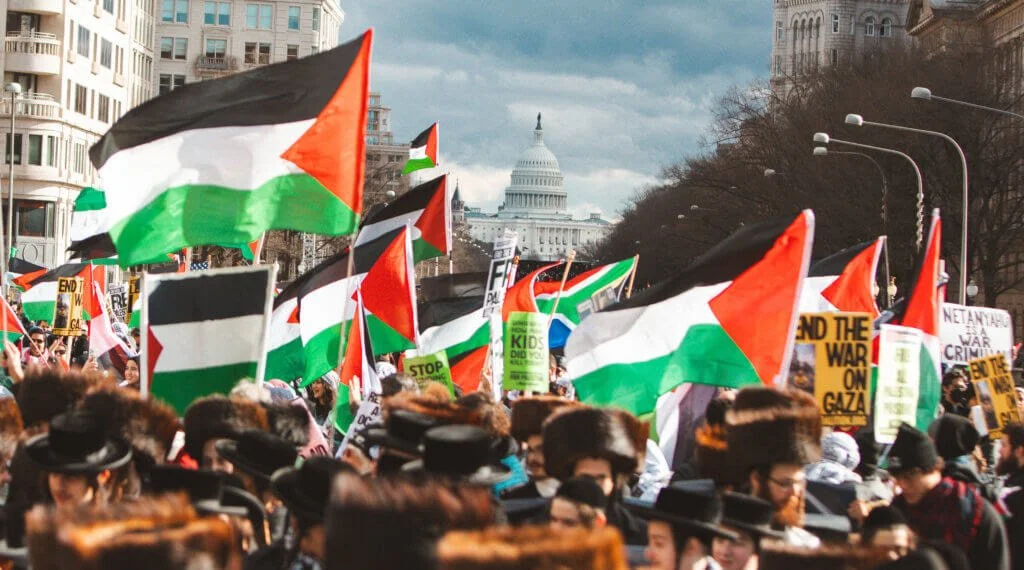
UPWARDS OF 400,000 PRO-PALESTINE PROTESTORS TAKE THE STREETS IN A NATIONAL MARCH IN WASHINGTON DC TO SHOW SUPPORT FOR PALESTINIANS AND CALL FOR A CEASEFIRE AND END THE GENOCIDE IN GAZA, JANUARY 13, 2024. (PHOTO: EMAN MOHAMMED)


A Heartfelt Announcement

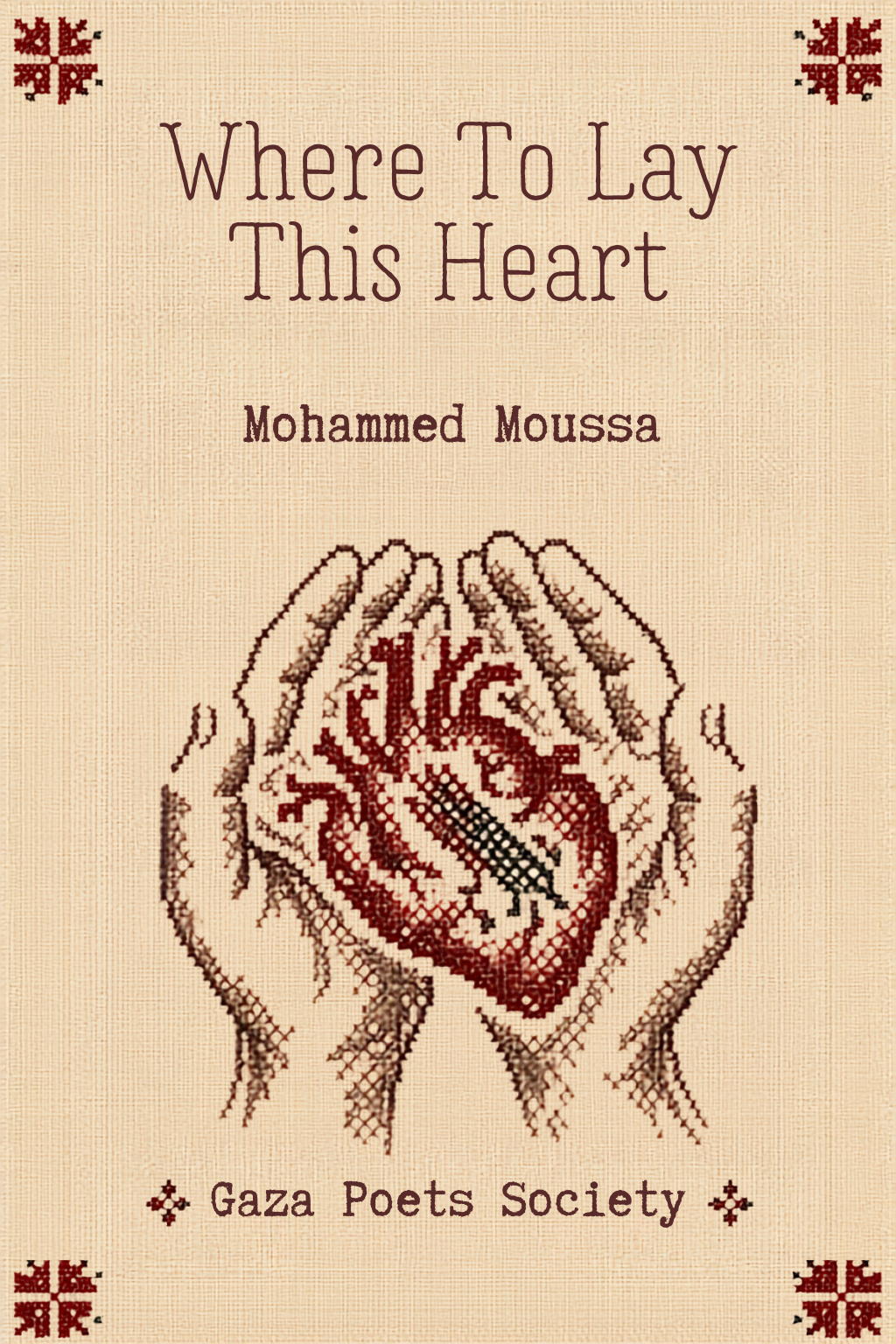
Where to Lay This Heart

A New Poetry Collection by Mohammed Moussa

Now Available from the Gaza Poets Society

I am deeply excited to share that my newest poetry collection, Where to Lay This Heart, is available right now in the Gaza Poets Society shop.

This is one of the collections closest to my heart. Its title is a question that feels almost too heavy to carry, too difficult to answer, and nearly impossible to release in these times: Where to lay this heart?

Where to Lay This Heart contains more than 200 poems. These are elegies, poems of mourning for a lost city, a lost land, a body weighted with grief, and a heart that no longer knows where to rest.

The poems speak of sorrow that has nowhere to go, of a land that has been taken, and of a body that continues to carry what it can no longer hold alone. They are questions and fragments of answers I have carried inside myself for a long time. I offer them now in the hope that they might find a place in you as well that they might help you feel what I feel, think what I think, and know that there is still somewhere for this grief to take shelter when it grows too tired of living only in one heart, one body, and one land.

How to Get Your Copy: Click this link to snag this powerful poetry collection now.

buymeacoffee.com/gazapoets/e/560402

— Mohammed Moussa. Gaza Poets Society