In Gaza, surveillance often arrives from above. Israeli drones remain suspended over daily life for hours at a time, merging reconnaissance with permanence. Many people in Gaza now speak about drones the way others speak about weather: as a permanent condition surrounding daily life. AI-assisted targeting systems, digital mapping technologies and the nonstop production of visual data transform the movement of people and vehicles into exposure.
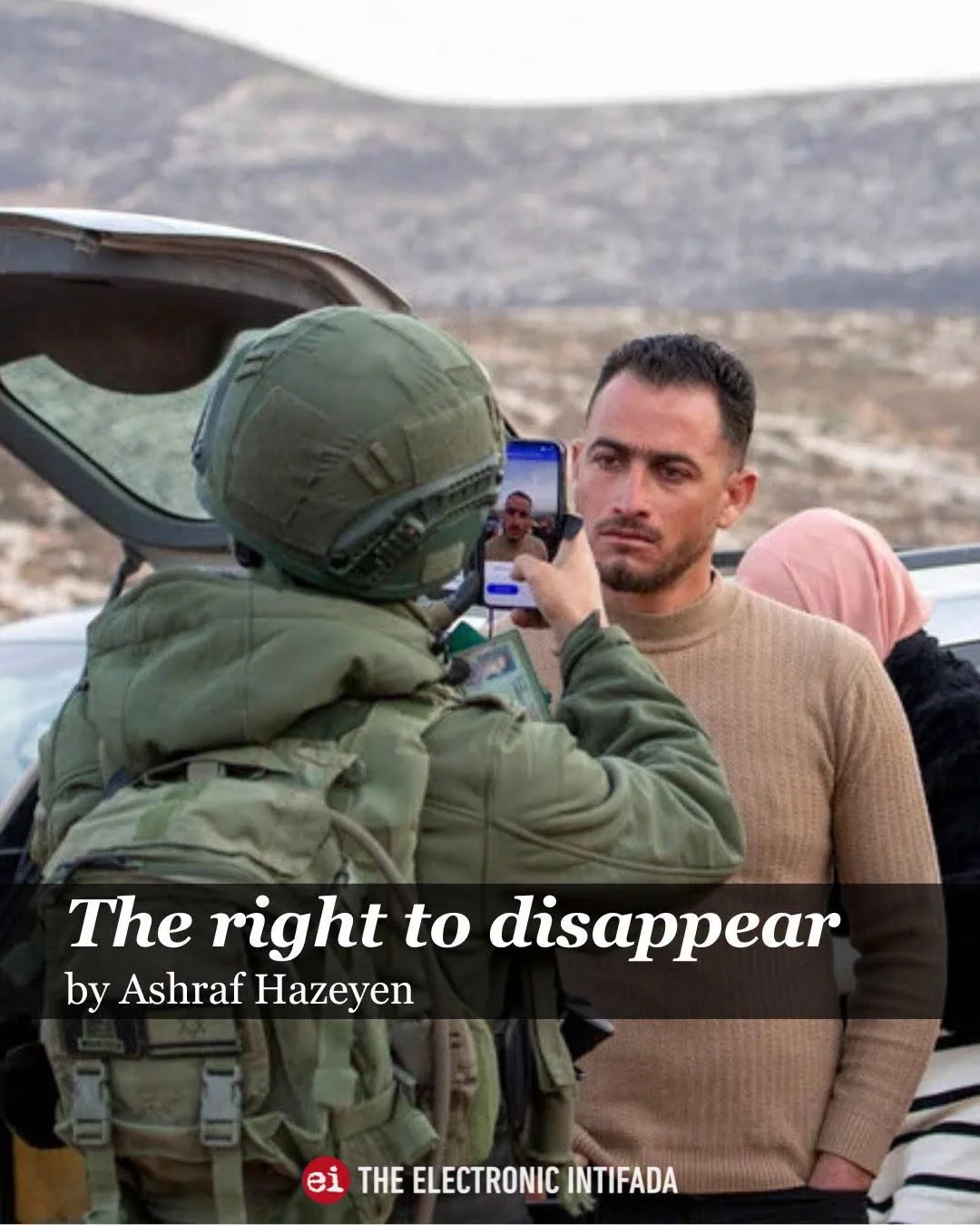
In the West Bank, the surveillance architecture is more visible on the ground: biometric checkpoints, facial recognition cameras and permit systems regulate mobility through identification and verification. Commuters wait in long lines at checkpoints where phones are searched and faces are verified through biometric scanners. Between these fragmented geographies of Gaza and the West Bank, different technologies operate yet they increasingly produce the same political condition: Palestinian life remains subject to systems of monitoring.
Colonial rule depends on knowing where people are, how they move and how they can be categorized. This control over Palestinian mobility remains central to the structure of occupation. As checkpoints reorganize the ordinary rhythms of movement through inspection and authorization, and as drones hover above Gaza, the unrecorded walk, the anonymous gathering and the silence that leaves no digital trace narrow under continual scrutiny.
Visibility no longer exists only during moments of direct confrontation. It settles into daily behavior and alters how people speak, move, gather and disappear from view. Helga Tawil-Souri has described this extension of surveillance into the ordinary rhythms of Palestinian life as a form of “digital occupation.” Residents describe avoiding certain conversations over phones, limiting online activity and changing their routes because they assume they are being watched.