Poll shows one in five Israelis considering emigration

Middle East Monitor 

4͏h͏ ·

A poll by Israel’s Kan public broadcaster on emigration from Israel found that one-third of respondents know someone who has left the country, while 12 per cent said the outcome of the next election could determine whether they stay in Israel or leave.

The issue of emigration from Israel, and concerns over a growing number of Israelis choosing to leave the country, is expected to be a key issue in the upcoming election.

Read: https://www.middleeastmonitor.com/20260810-poll-shows.../

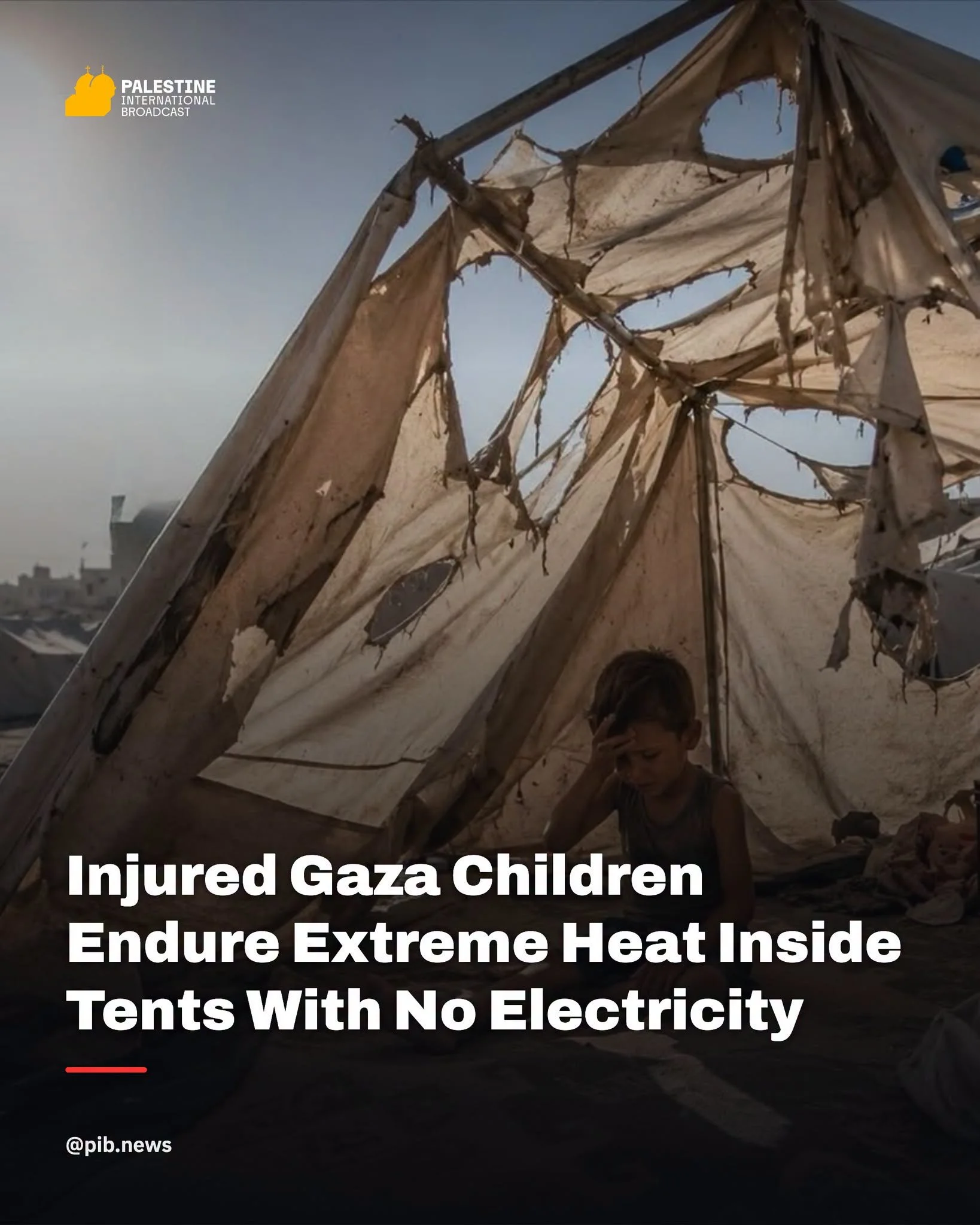
Injured Gaza Children Endure Extreme Heat Inside Tents with No Electricity

Palestine International Broadcast

2͏h͏ ·

The scorching heat is unbearable. Inside torn tents, temperatures exceed 40°C (104°F), making life even harder for injured children.

Instead of healing, their wounds worsen under the extreme heat. They urgently need a solar panel and a battery to power a fan, providing even a small amount of relief from the suffocating conditions.

A simple source of electricity can ease their suffering and help protect their fragile health

Water Fact – August 10, 2026

Water is a weapon in Israel’s slow motion genocide

On August 4, 2026, The Palestine Chronicle published “Thirsty, Wounded, Still Alive: Gaza’s Artists in the Water Line” by Gaza resident Hani al-Salmy, the author of 20 novels.  Al-Salmy writes about his encounters with three prominent cultural workers from Gaza, who are waiting in “the endless water line” to fill their empty water containers.  

The first is Naseem Nasr, a well-known theater director, who tells him that “Gaza itself has become an open theater of tragedy.”  The second is the prominent painter Nasser Amer, who says that “for the first time in my life, I have learned that color itself can weep.”   To the third, the musician and composer Jabr al-Hajj, “the most exquisite rhythm is the sound of water pouring into a displaced person’s container after hours of deadly waiting.”

Those “hours of deadly waiting” now define the lives of Palestinians in Gaza, as detailed by Médecins sans Frontières (Doctors without Borders) in its damning 42-page report, Water as a weapon: Israel’s destruction and deprivation of water and sanitation in Gaza (April 2026).   The report does not mince words when it describes how water scarcity and “entirely preventable dire sanitation and hygiene conditions” are deliberately engineered by Israel as a form of life-defying collective punishment of the entire population.  

The impact of Israel’s weaponization of water on women and girls is the focus of a June 2026 briefing paper by Oxfam International, Seven ways the water crisis in Gaza is hurting women.  Water production in Gaza is now less than a quarter of what it was before Oct. 7, 2023, when Gaza’s population was already experiencing a dire water shortage.  Today, many parts of Gaza have access to only 3 – 5 liters of clean water per person a day (well below the 15 liter minimum standard set by the UN).   Females – including young girls, the elderly, and pregnant women - are primarily responsible for walking long distances to water collection points and waiting for hours in the heat to fill containers that then need to be hauled back to tents and damaged homes and somehow made sufficient for drinking, cooking and family hygiene.  The harassment and humiliation they endure, the plight of women with disabilities and chronic illnesses, the ordeal caused by lack of accessible toilets and sanitation products for menstruating women and girls, and the psychological stress caused by the daily search for water are documented in the report.  

A year ago, New Lines Magazine (July 29, 2025) featured an article entitled “The Toxic Blowback of Israel’s Bombs” by Lesley Joseph warning about the impact of ‘ecocide’ on Gaza’s population.  Beyond the skin and respiratory infections, hepatitis, diarrhea and other waterborne illnesses that now sweep through the Gaza Strip are the long-term risks presented by thousands of decomposing bodies, and the chemicals and toxic heavy metals from bombs that migrate through the soil into the water supply, causing birth defects and cancers, and eventually damaging brains, lungs, livers and nervous systems.  “Palestinians say that Gaza carries the smell of death,” Prof. Joseph writes, “and in the current situation that smell is not going away.”

Alliance for Water Justice in Palestine


Gaza beekeepers turn damaged rooftops into apiaries after Israeli attacks destroy livelihoods

Beekeepers in Gaza who lost their apiaries and livelihoods in Israeli attacks are developing unconventional solutions to revive their profession and recover from the devastation caused by the war, Anadolu reports.

Displaced Palestinian beekeeper Ibrahim al-Dabba has resumed production by placing beehives on the roof of a damaged apartment building in the Tel al-Hawa neighborhood of southern Gaza City as security risks prevent him from reaching agricultural land.

Al-Dabba, who also heads the Gaza Strip Beekeepers Cooperative, told Anadolu that the beekeeping industry provided a livelihood for about 10,000 people across Gaza before the war.

Around 1,000 beekeepers were active in the territory before the attacks, with approximately half large-scale and half small-scale producers, he said, adding that Gaza previously produced significant quantities of honey.

Like most other productive sectors, beekeeping was almost entirely destroyed by the Israeli attacks, according to al-Dabba.

Beekeepers attempted to resume production following the ceasefire but received insufficient support, he said.

The number of beehives in Gaza fell below 500 after the war but has since increased to about 3,000 through a recovery plan developed by the cooperative. More than 100 beekeepers have also returned to production.

Read the entire article from the Middle East Monitor here.