Water Fact--September 7, 2026

Food insecurity and water deprivation are fuel for Gaza’s ongoing genocide 

“Why should a child filling up water die?” Because Israel said that bombing a water station in western Gaza City on Sept. 1, killing four people including two children, was necessary to “remove threats.”  And because the international community is doing nothing to stop the daily slaughter.


Destroying Gaza’s remaining clean water supply appears to be part of Israel’s far right playbook for an impending “mass removal” of the population, possibly to African countries.  According to OCHA, on August 24 “severe damage to a UNICEF-supported water well and desalination facility in Deir Al Balah has disrupted access to safe drinking water for more than 4,000 people, including around 2,000 children. Emergency water trucking is ongoing.”  In an August 28th post, UNICEF reported that four children had been killed in strikes which also destroyed its warehouse containing nutrition supplies for children, pregnant women and nursing mothers.   


On Sept. 1, the World Health Organization (WHO)  warned that over 6,700 water samples taken during January – August 2026 indicated a tripling of water contamination in Gaza over those months, causing a doubling of cases of acute watery diarrhea which is frequently lethal for children.   With Israel blocking the entry of sufficient supplies of baby formula and many mothers unable to breastfeed because of malnutrition and dehydration, infants are especially at risk.  


And famine could return to Gaza.  A  report published on August 13 by the Integrated Food Security Phase Classification (IPC), the world’s leading famine-monitoring body, indicated that although the Oct. 2025 ‘ceasefire’ enabled more humanitarian aid to enter the Gaza Strip, “conditions remain highly fragile” with at least 1.4 million people  (nearly 70 percent of the population) expected to face “high levels of food insecurity” before the end of the year.  The report states that the amount of food reaching people “has declined since Feb. 2026, falling from a peak of 2.13 million people reached in Nov. 2025 to 1.49 million people in May 2026” and could fall further given funding constraints and uncertainty concerning the ability of 37 international NGOs to operate after being barred by Israel.  “Meanwhile, the area accessible to Gaza’s population has shrunk by more than 50 percent since October 2023, forcing people to shelter in overcrowded sites marked by extremely precarious conditions and heightened risk of infectious disease. Combined with limited access to health, water, sanitation and hygiene (WASH) services, these conditions make recent improvements in food security and nutrition highly vulnerable to reversal.”


As the approaching rainy season threatens to spread sewage into tents, and with water for drinking, hygiene and cooking restricted to only about 3 liters per person per day in most of the Gaza Strip – far below the WHO’s required minimum of 15 liters – the outlook is increasingly bleak for public health and human survival.  


Alliance for Water Justice in Palestine


Research Spotlight: Militarized Industrial Policy and Israeli Surveillance Firms

7amleh is highlighting a research contribution by Islam Al-Khatib, titled “Militarized Industrial Policy and Israeli Surveillance Firms.”

The paper is one of five contributions included in Digital Domination: AI, Surveillance, and Digital Power in Palestine and Beyond, published by 7amleh in cooperation with the Ibrahim Abu-Lughod Institute of International Studies at Birzeit University as part of the first cohort of the Maryam Abu Daqqa Fellowship.

The research examines how Israel’s surveillance industry is connected to the military and intelligence establishment, the private sector, and venture capital, and how surveillance technologies developed within the context of occupation and control over Palestinians are later repackaged and exported to global markets.

Focusing on Toka Group and Corsight AI, the paper explores how these companies operate within a broader militarized industrial structure linking state priorities, private capital, and international markets.

🔗 Read the full research contribution

📘 Read the full Digital Domination book

More from 7amleh
News | Publications | Weekly Update | Campaigns

Support Palestinian Digital Rights

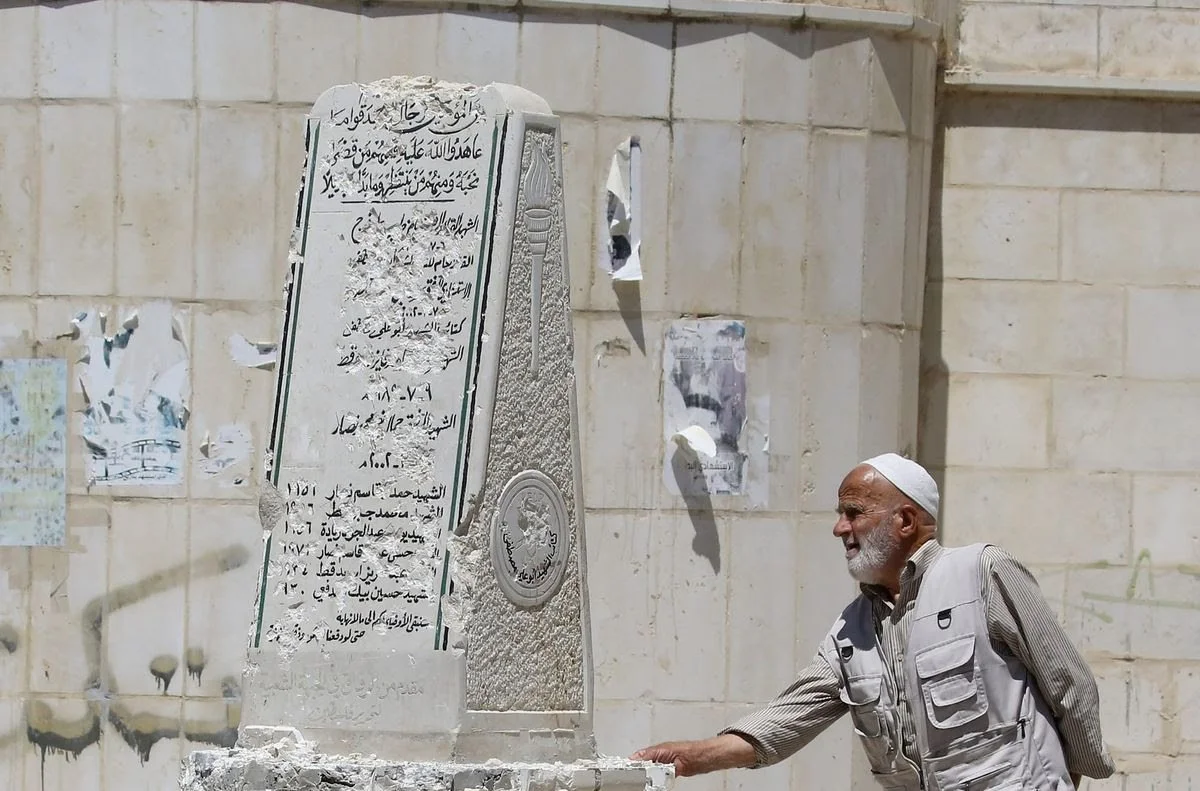
Israel's Smotrich Calls to Destroy 40 Palestinian Memorials in West Bank

A Palestinian martyrs’ memorial damaged by an Israeli settler attack in Madma village in the Occupied West Bank on August 25, 2026 (photo Nidal Eshtayeh/Xinhua via Getty Images)

Days after a far-right Israeli politician took a sledgehammer to a Palestinian monument, Finance Minister Bezalel Smotrich demanded that Prime Minister Benjamin Netanyahu order the dismantling of 40 additional Palestinian memorials in the Occupied West Bank, as first reported by Israel’s Channel 14.

Smotrich outlined his request in a letter in late August, two days after Zvi Sukkot, a member of the Knesset for Smotrich’s right-wing Religious Zionist Party, broadcasted his destruction of a memorial in Madama Village. Inscribed in the stone facade were the names of Palestinians who have been killed by Israel. Netanyahudenounced Sukkot for taking the law into his own hands, while Smotrich defended his party member on X, pushing for the destruction of “dozens more terrorist monuments throughout Judea and Samaria.”

“These terrorist incitement (and memorial) infrastructures have existed for many years, just minutes away from Israeli cities,” Smotrich wrote in his letter, responding to Netanyahu’s criticisms of Sukkot’s actions. “No systematic and sufficient work is being done to eliminate them.” He attached a table with 40 Palestinian memorials, demanding that the prime minister instruct the Israeli Defense Forces (IDF) to dismantle the structures within 24 hours.

Netanyahu has not publicly responded to the finance minister’s demand.

by Anna Lee. September 2, ‘26. on Hyperalleric
Update from Physicians for Human Rights Israel (PHRI) -

Update from Physicians for Human Rights Israel (PHRI) -

*Gaza hospital director Abu Safiya reports continued beatings, threats in Israeli detention*

*Kamal Adwan Hospital director says prison guards continue to beat him, including on sensitive areas of his body, deliberately deprive him of sleep and warned him not to disclose his detention conditions to his lawyer. The Israel Prison Service continues to delay access for an independent physician despite his recent transfer to a prison medical facility.*

Dr Hussam Abu Safiya, director of Kamal Adwan Hospital in Gaza, has been held by Israel without charge or trial since December 2024. During a legal visit on Sunday, 30 August 2026, he told his lawyer that violence against him by prison guards was continuing. According to an affidavit by his lawyer, Abu Safiya said that in recent weeks guards had beaten him on various parts of his body, including sensitive areas, using their hands, boots and batons. He also said guards deliberately deprive him of sleep by making noise and using the prison’s public-address system during the night. According to Abu Safiya, following a previous visit by his lawyer, he was assaulted and warned not to share information about the conditions of his detention.

The new testimony comes as Physicians for Human Rights Israel (PHRI) pursues legal action seeking access for an independent physician to examine Abu Safiya. A request to allow Dr Amit Tirosh, a specialist in internal medicine, to examine him was submitted to the Israel Prison Service (IPS) on 7 July. After the request was not approved, Dr Abu Safiya, through PHRI, petitioned the Administrative Court. The IPS has since requested a further extension to submit its response to the petition. PHRI maintains that there is no justification for delay and that an independent examination should be allowed without delay.

The need for an independent examination has become all the more pressing in light of Abu Safiya’s medical condition. According to an update he provided, on 10 August he was transferred from the underground “Rakefet” detention facility, where he had been held in isolation, to the IPS medical facility at Ramla Prison (Marash). He remained there for approximately a week and underwent several examinations that identified a number of medical problems. In its submission to the court, PHRI stressed that his exceptional transfer to the IPS medical facility itself indicates significant medical needs that cannot be adequately addressed in ordinary prison wings — precisely the circumstances in which an independent second medical opinion is warranted.

The latest testimony adds to previous accounts from Abu Safiya of severe violence throughout his detention. During earlier legal visits, he was reported to have suffered injuries to his head, face and other parts of his body, and said the violence continued even after his lawyer demanded that he receive an urgent medical examination. Official IPS medical records provided to PHRI documented an injury to his left eye and recorded complaints he made to medical staff about injuries to his head and chest.

*Physicians for Human Rights Israel said*: “Dr Abu Safiya’s latest testimony confirms that the pattern of deliberate abuse against him is continuing. He describes ongoing violence, sleep deprivation and threats aimed at preventing him from reporting the conditions of his detention to his lawyer. At the same time, his medical condition requires further assessment and treatment, yet the IPS continues to delay access for an independent physician. The repeated testimonies and mounting evidence of harm to Dr Abu Safiya only heighten the urgency of allowing an immediate independent medical examination.”

Meanwhile, there has been a further development in PHRI’s separate petition to the Israeli Supreme Court seeking the release of 14 Palestinian doctors from Gaza, including Dr Abu Safiya, who are being held by Israel without charge or trial. The Supreme Court ordered the state to clarify by 13 September whether the Chief of Staff, or someone legally authorised by him to do so, specifically considered the request to release the 14 doctors, exercising the discretion granted under the law and taking into account their status as doctors. If so, the state must clarify who exercised that discretion.
---
For further information: Ran Yaron, PHRI Spokesperson, +972-54-668-0857